
Rapid Quenching Furnace Manufacturer in India: What Actually Matters in Real Production
When you start working with alloy steels or critical components, you quickly realize one thing—heating is only half the job. What really defines the final properties is how fast and how uniformly you quench the material. That’s exactly where a rapid quenching furnace manufacturer in India plays a crucial role.
In real production, I’ve seen perfectly heated components fail simply because the quenching step was delayed by a few seconds. It doesn’t take much. A small delay, uneven agitation, or poor oil circulation can change hardness, distort parts, or even lead to rejection. This is why industries don’t just look for a furnace—they look for a system that can deliver consistent, repeatable quenching performance.
At JR Furnace, the focus has always been on combining speed, control, and mechanical reliability into one integrated system.
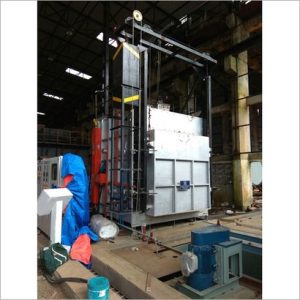
What Is a Rapid Quenching Furnace and How Does It Work?
A rapid quenching furnace is designed to heat components to a specific temperature. The key difference from standard systems is the speed of transfer and the control during quenching.
What actually happens is simple in theory but tricky in execution. The furnace heats the load to the required temperature, holds it uniformly, and then a manipulator or charging system moves the hot charge into within seconds.
In well-designed systems, this transfer happens within 20–30 seconds or even faster. That time gap is critical. If it increases, the material starts losing the required microstructure before quenching even begins.
Why Speed in Quenching Is Not Optional
Many people assume that once the material reaches the right temperature, the job is done. In practice, that’s not true.
In real production, one common issue I’ve seen is inconsistent hardness across batches. When we investigated, the root cause was not heating—it was delayed quenching.
Rapid quenching ensures:
- The desired microstructure is locked immediately
- Hardness remains consistent across the component
- Distortion is minimized
- Rejection rates drop significantly
When a rapid quenching furnace manufacturer in India designs a system correctly, the entire process—from heating to immersion—is synchronized.
Key Components That Define Furnace Performance
Not all rapid quenching systems perform the same. The difference lies in design details that many buyers overlook.
Heating System and Temperature Uniformity
A good furnace maintains temperature uniformity within ±5°C. This might sound like a small number, but in metallurgy, it makes a huge difference.
Electric, gas-fired, and oil-fired systems are all used depending on plant requirements. Electric systems offer cleaner control, while gas-fired systems are often preferred for heavy-duty operations.
Manipulator and Charging System
This is where most of the real engineering happens.
In advanced systems, a rail-mounted or fork-type manipulator transfers the load. The movement must be smooth, fast, and precisely controlled. Any jerk or delay affects both safety and process quality.
I’ve seen older setups where manual handling slowed down the process. Once upgraded to automated manipulators, the improvement in consistency was immediate.
Applications of Rapid Quenching Furnaces in Industry
Rapid quenching furnaces are widely used across industries where mechanical properties must be tightly controlled.
In daily operations, these systems are commonly used for:
- Hardening of alloy steel components
- Tempering processes
- Solution annealing
- General heat treatment cycles
Industries like automotive, aerospace, and heavy engineering depend on these systems because they handle large volumes without compromising quality.
Automation and Control: Where Consistency Comes From
Modern furnaces rely heavily on automation. Without it, maintaining repeatability becomes difficult.
At JR Furnace, systems are equipped with PLC and SCADA controls. These systems monitor:
- Temperature cycles
- Transfer timing
- Quenching duration
- Oil temperature
In real production, automation removes guesswork. Operators don’t have to rely on manual judgment for every cycle. The system maintains consistency across batches.
Practical Challenges and How Good Design Solves Them
From experience, a few challenges come up repeatedly in heat treatment plants.
Delay Between Heating and Quenching
Even a few extra seconds can impact hardness. A fast manipulator system solves this.
Oil Temperature Rise
After multiple cycles, oil temperature increases. Without proper cooling, quenching becomes less effective. Heat exchangers handle this.
Uneven Cooling
Poor agitation leads to distortion. Proper circulation systems fix this.
Mechanical Wear
Heavy loads cause wear in moving systems. Strong structural design and proper alignment prevent breakdowns.
A reliable rapid quenching furnace manufacturer in India designs systems keeping these real-world problems in mind.
How to Choose the Right Rapid Quenching Furnace Manufacturer in India
If you’re planning to invest in a rapid quenching system, focus on practical performance, not just specifications.
Look for:
- Proven temperature uniformity
- Fast and reliable transfer systems
- Automation with real-time monitoring
- Customization based on your process
In many cases, standard designs don’t work. Every plant has different production loads, component sizes, and process requirements.
Real Production Insight: Why Integration Matters
One thing that often gets ignored is integration. A furnace alone cannot deliver results unless it works seamlessly with the charging system.
I’ve seen setups where each component worked fine individually, but the overall system failed due to poor synchronization.
That’s why integrated systems—where heating, transfer, and quenching are designed together—perform much better.
At JR Furnace, this integration is treated as a single process rather than separate machines.
Performance Expectations from Modern Systems
Today’s industries expect more than just heating equipment. They expect consistency, efficiency, and reliability.
A well-designed rapid quenching furnace should deliver:
- Repeatable hardness across batches
- Minimal distortion
- Reduced rejection rates
- Stable operation over long cycles
When these factors come together, production becomes predictable—and that’s what every plant aims for.