
Manufacturer of
Tempering Furnace
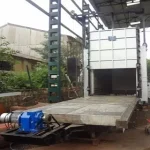
Tempering involves heating of steel that will be quenched and hardened for an adequate period of time so that the metal can be balanced equally. Tempering is a process where metal will be precisely heated to below the critical temperature, often in air, a vacuum, or inert atmospheres. Tempering will change the properties like ductility, hardness, strength, structural stability and toughness. The exact temperature will vary according to the amount of hardness that needs to be reduced. Higher temperatures will result into high ductility, but low strength and hardness. Low tempering temperatures will produce low ductility, but more strength and hardness. So tempering process will produce the desired level of hardness and strength. This operation is performed on all carbon steels that have been hardened, in order to reduce their brittleness, so that they can be used effectively in required applications.
Get Quote
Tempering Furnace
Have you ever wondered how hardened steel becomes strong yet tough enough for real-world use? The answer often lies in a Tempering Furnace, an essential system in the heat treatment process that helps metals achieve the right balance of hardness, strength, and durability.
In many industrial applications, metals are first hardened through quenching. However, hardened metal can become brittle and prone to cracking. This is where the tempering process plays a crucial role. By reheating the hardened metal under controlled conditions, industries improve the mechanical properties of steel and make it suitable for demanding applications.
Understanding the Role of Heat Treatment
Heat treatment is widely used in manufacturing industries to change the physical and mechanical properties of metals. A Heat treatment furnace helps control heating and cooling cycles so that metals gain the desired characteristics.
When steel is heated and then rapidly cooled in oil, water, polymer solutions, or air, it becomes very hard. But this hardness can also lead to brittleness. Tempering removes that brittleness and improves toughness.
“Proper heat treatment does not just strengthen metal; it balances hardness, toughness, and stability.”
The process involves reheating the hardened steel to a temperature below its critical point and holding it there for a specific time before cooling it again.
Why Tempering Matters in Metal Processing
The tempering process is usually carried out within four hours after quenching to maintain the integrity of the metal. During tempering, the steel is heated evenly so that the internal stresses created during quenching are relieved.
Key results of tempering
- Reduced brittleness in hardened steel
- Improved toughness and durability
- Better structural stability
- Controlled hardness levels
- Balanced mechanical properties
Industries that rely on metal hardening furnace systems use tempering to ensure their components perform reliably under load.
Heat Treatment Process and Cooling Methods
During heat treatment, parts can be quenched using several cooling methods. Each method influences the final properties of the steel.
| Cooling Medium | Purpose | Common Use |
| Water | Fast cooling | High hardness applications |
| Oil | Moderate cooling | Machine parts |
| Polymer solution | Controlled cooling | Industrial components |
| Air | Slow cooling | Structural steel |
| Inert atmosphere | Oxidation prevention | Precision components |
After quenching, components move to the Tempering Furnace where they are reheated under controlled conditions.
Temperature and Mechanical Properties
Tempering temperature directly affects the mechanical characteristics of steel.
| Tempering Temperature | Ductility | Strength | Hardness |
| Low temperature | Low | High | High |
| Medium temperature | Balanced | Balanced | Balanced |
| High temperature | High | Lower | Lower |
Higher temperatures increase ductility while reducing hardness. Lower temperatures keep the metal stronger but less flexible.
Common Heat Treatment Furnace Types
Industries use different Heat treatment furnace types depending on production needs.
Batch and Continuous Systems
- Bogie type furnace
- Chamber furnace
- Pit furnace
- Pusher furnace
- Continuous tempering furnace
A continuous hardening and tempering furnace is widely used for large-scale production lines where parts must move through heating zones without interruption.
Batch systems, on the other hand, are used when flexibility and varied component sizes are required.
Advanced Furnace Technologies
Modern heat treatment plants use advanced furnace technologies for precise control.
Vacuum Processing
A vacuum tempering furnace performs heat treatment in a vacuum environment. This prevents oxidation and contamination during heating.
Benefits of vacuum tempering:
- Clean metal surfaces
- Controlled atmosphere
- Reduced scaling
- Higher precision in temperature control
Vacuum systems are widely used in aerospace, automotive, and tool manufacturing industries.
Industrial Applications
Many sectors rely on the hardening and tempering furnace process to manufacture reliable components.
Major industries using tempering systems
- Automotive manufacturing
- Tool and die production
- Aerospace engineering
- Construction equipment manufacturing
- Heavy machinery production
Components such as gears, shafts, springs, and structural parts often require tempering to perform under heavy stress.
Features of Modern Tempering Ovens
Industrial tempering ovens are designed to maintain consistent heating across all parts. Uniform heating ensures every component receives the same treatment.
Important furnace features
- Strong recirculation fan for temperature uniformity
- High-quality insulation to reduce heat loss
- Digital temperature controllers
- Safety compliance and monitoring systems
- Electric or Gas fired heat treatment Furnace options
These features allow industries to achieve reliable results in every heat treatment cycle.
Types of Tempering Furnace
Different industries choose furnaces based on capacity, production style, and temperature requirements.
| Furnace Type | Operation | Application |
| Chamber furnace | Batch | Tool and die industry |
| Bogie furnace | Batch | Heavy components |
| Pit furnace | Vertical loading | Shafts and long parts |
| Pusher furnace | Semi-continuous | Automotive parts |
| Continuous furnace | Continuous | High production lines |
Understanding the Types of tempering furnace helps manufacturers select the right system for their process.
Choosing the Right Furnace
Selecting the right furnace depends on production requirements and heat treatment parameters.
Factors to consider
- Temperature range required
- Component size and shape
- Production volume
- Energy efficiency
- Automation level
A reliable tempering furnace manufacturers partner can design a system that matches industrial needs and ensures long-term performance.
Cost Considerations
Many industries research the tempering furnace price before investing in heat treatment equipment. The price depends on several factors such as furnace size, automation level, heating method, and production capacity.
Typical cost factors
- Furnace capacity
- Temperature range
- Control systems
- Heating method (electric or gas)
- Custom design requirements
Companies often compare Heat treatment Furnace price along with long-term energy efficiency to make the right investment decision.
Businesses searching for a tempering furnace for sale should also consider maintenance support and spare parts availability.
Heat Treatment Industry in India
India has a strong manufacturing base and many Heat treatment furnace manufacturers in India design advanced furnaces for industries such as automotive, aerospace, and engineering.
Among them, JR Furnace manufactures reliable heat treatment systems including:
- Bogie type tempering furnace
- Chamber type tempering furnace
- Pit type tempering furnace
- Pusher type tempering furnace
- Continuous tempering furnace
These systems are available in both electric and gas-fired heating options and can operate at temperatures up to 750°C.
Process Timing and Soaking
For effective tempering, the soaking time must be carefully maintained.
- Minimum 2 hours soaking time
- Additional 1 hour per inch of thickness above 1 inch
- Snap tempering may be done for 2 hours at lower temperature
This controlled heating ensures the metal reaches uniform temperature and internal stresses are relieved properly.
Advantages of Tempering in Steel Processing
Tempering offers several benefits in industrial manufacturing:
- Reduces internal stresses
- Improves fatigue resistance
- Enhances structural stability
- Prevents sudden failure of hardened parts
- Produces reliable mechanical performance
Without tempering, hardened steel components would be too brittle for practical use.
Frequently Asked Questions
What does tempering do to steel?
Tempering reduces brittleness in hardened steel and improves toughness while maintaining adequate hardness.
How soon should tempering occur after quenching?
Tempering should usually take place within four hours after quenching to avoid structural damage.
What temperature range does a tempering furnace operate in?
Industrial systems generally operate up to 750°C, depending on the material and application.
What industries use tempering furnaces?
Automotive, aerospace, heavy machinery, and tool manufacturing industries widely use them.
What affects tempering furnace price?
Capacity, automation, furnace type, heating method, and temperature range all influence the cost.
Tempering Furnaces by JR