

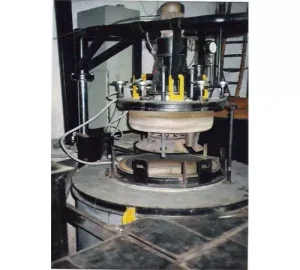
Gas Nitriding Furnace
The Gas Nitriding Furnace machine is a batch furnace used for ammonia based processes Gas Nitriding is especially suitable for pre-heat treated tool steels and alloy steels.
Read More
Gas Nitriding Furnace
Gas nitriding furnace technology plays an important role in modern heat treatment industries. Many manufacturers rely on a nitriding furnace to improve the surface hardness, wear resistance, and fatigue life of metal components without changing the core strength of the material.
But why do industries choose a gas nitriding furnace for critical components?
The answer is simple. The process creates a hardened surface layer using nitrogen while keeping the internal structure strong. This makes it ideal for gears, dies, shafts, tools, and other precision components.
At JR Furnace, the gas nitriding furnace is designed specifically for controlled nitriding applications. Special metals and manufacturing techniques increase the life of the nitriding retort and internal fixtures. These heavy-duty systems operate efficiently for long periods with minimal maintenance.
“A properly designed nitriding furnace ensures uniform hardness and reliable metallurgical performance.”
What is a Gas Nitriding Furnace?
A gas nitriding furnace is a heat treatment furnace used to diffuse nitrogen into the surface of steel components. The furnace uses ammonia gas that breaks down into nitrogen and hydrogen at high temperature.
The nitrogen atoms penetrate the metal surface and form extremely hard nitrides. This layer improves:
- Surface hardness
- Wear resistance
- Corrosion resistance
- Fatigue strength
Unlike other heat treatment processes, the nitriding furnace works at relatively low temperatures, so distortion of parts is very minimal.
Features of JR Furnace Gas Nitriding Furnace
The gas nitriding furnace in India manufactured by JR Furnace is engineered for reliability and consistent metallurgical results.
Key Features
- Leak tight retort and door assembly
- Powerful fan for gas circulation
- Programmable ratio controller
- Carbon potential control
- Vacuum assistance for annealing and normalizing
- Provision for ammonia purging
- Stainless steel charge fixtures
- Optional automatic ammonia dissociation system
These features allow the nitriding furnace to maintain a stable atmosphere, which is essential for high-quality nitriding.
Precise control means better surface properties and repeatable results.
How a Gas Nitriding Furnace Works
The working principle of a gas nitriding furnace is based on controlled nitrogen diffusion.
Process Steps
- Component Loading
Parts are loaded on special fixtures inside the furnace retort. - Heating Stage
The furnace gradually heats to the required nitriding temperature. - Ammonia Gas Injection
Ammonia gas enters the chamber and dissociates into nitrogen and hydrogen. - Nitrogen Diffusion
Nitrogen atoms diffuse into the metal surface and create nitrides. - Controlled Cooling
Parts cool slowly inside the nitriding furnace to maintain dimensional stability.
Types of Gas Nitriding Furnace
Different industries require different furnace configurations. The main types of gas nitriding furnace include the following.
1. Pit Type Nitriding Furnace
- Vertical furnace design
- Suitable for long shafts and heavy parts
- Efficient gas circulation
2. Box Type Gas Nitriding Furnace
- Horizontal chamber structure
- Ideal for batch processing
- Easy loading and unloading
3. Continuous Nitriding Furnace
- Designed for large production lines
- Parts move through multiple heating zones
4. Controlled Atmosphere Nitriding Furnace
- Advanced atmosphere monitoring
- Automated ammonia dissociation control
Each nitriding furnace type supports specific production requirements depending on component size and volume.
Applications of Gas Nitriding Furnace
Industries use the gas nitriding furnace for several heat treatment applications. The furnace supports both ferrous and non-ferrous processing.
Common Applications
- Black and bright annealing of steel wire
- Black and bright annealing of steel forging and casting
- Decarburising of steel stampings
- Hardening of defence components
- Tempering and stress relieving
- Annealing of copper products
- Annealing of aluminium products
- Normalising of components
- Gas carburizing
- Gas nitriding
- Carbonitriding
These applications highlight the versatility of the gas nitriding furnace across multiple industries.
Gas Nitriding Furnace Specifications
The technical structure of a gas nitriding furnace ensures stable process control.
| Feature | Description |
| Furnace Chamber | Heavy duty steel structure |
| Retort Material | Heat resistant alloy steel |
| Gas Circulation | High power fan system |
| Atmosphere Control | Ammonia dissociation monitoring |
| Control System | Programmable temperature controller |
| Temperature Range | Suitable for nitriding processes |
Such specifications ensure uniform nitriding results and long equipment life.
Gas Nitriding Furnace in India
The demand for gas nitriding furnace in India has increased due to rapid industrial growth. Automotive, aerospace, defence, and tool manufacturing sectors require reliable heat treatment systems.
Manufacturers choose JR Furnace because the equipment provides:
- Consistent nitriding atmosphere
- Long retort life
- Low maintenance design
- Energy efficient heating system
- Strong process control
A well-designed nitriding furnace helps industries maintain product quality and production stability.
Nitriding Furnace Price Factors
The nitriding furnace price depends on several technical parameters.
Major Cost Factors
- Furnace capacity
- Temperature range
- Automation level
- Atmosphere control system
- Retort material quality
- Optional monitoring equipment
| Furnace Type | Typical Price Influence |
| Small Batch Furnace | Lower investment |
| Medium Industrial Furnace | Moderate pricing |
| Automated Nitriding Furnace | Higher investment |
Although the nitriding furnace price varies, choosing a durable furnace reduces long-term operational costs.
Advantages of Gas Nitriding Furnace
Industries prefer the gas nitriding furnace because of its metallurgical advantages.
Benefits
- Minimal distortion of components
- Excellent wear resistance
- Increased fatigue life
- Uniform surface hardness
- Suitable for complex shapes
- Improved corrosion resistance
These advantages make the nitriding furnace an essential system in precision manufacturing.
Important Process Considerations
To achieve reliable nitriding results, operators must maintain strict process control.
Key Parameters
- Furnace temperature stability
- Gas flow ratio
- Ammonia dissociation rate
- Circulation uniformity
- Treatment duration
“Stable furnace atmosphere is the foundation of effective nitriding.”
When these parameters remain controlled, the gas nitriding furnace produces consistent surface hardening.
FAQs
What is a gas nitriding furnace used for?
A gas nitriding furnace is used to harden the surface of steel components by diffusing nitrogen into the material. It improves wear resistance and fatigue strength.
What industries use a nitriding furnace?
Industries such as automotive, aerospace, defence, tool manufacturing, and engineering commonly use a nitriding furnace.
What affects nitriding furnace price?
The nitriding furnace price depends on furnace capacity, automation level, temperature range, atmosphere control system, and additional monitoring equipment.
Why is gas nitriding furnace popular in India?
The gas nitriding furnace in India is widely used because it provides reliable surface hardening with minimal distortion, which is important for precision components.
What are the types of gas nitriding furnace?
Common types of gas nitriding furnace include pit type furnaces, box type furnaces, continuous furnaces, and controlled atmosphere nitriding furnaces.