

High Temperature Furnace
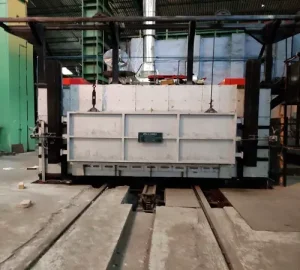
We are High Temperature Furnace Manufacturers in India. We are recognized as successful name of High Temperature Furnace. These are used for cyaniding, carbonitriding, nitriding, hardening, direct hardening of various steel components such as auto parts, bicycle parts, textile machinery components, precision turned components, and many other related products. The furnace can be electrical, oil fired or gas fired depending upon the requirement.
Read More
High Temperature Furnace Manufacturers in India.
Are you looking for a heating system that can handle extreme temperatures while maintaining complete control and consistency?
Industries that deal with ceramics, steel components, and precision parts need dependable heating systems. In many manufacturing plants, advanced thermal equipment plays a major role in improving product strength and durability. A High Temperature Furnace supports these demanding applications by offering stable performance even under continuous operation.
At JrFurnace, we design and manufacture systems that meet modern industrial heating needs. Our heating equipment supports high-temperature processes, automation, and long service life, helping businesses maintain quality and productivity.
Industrial Heating and Thermal Processing
Industrial production often requires temperatures beyond standard limits. A High Temperature Furnace works efficiently at operating temperatures up to 1700°C, making it ideal for technical ceramics and sintering operations around 1550°C.
These furnaces use Silicon Carbide Heating Elements (SiC Heating Rods) to generate uniform heat distribution. The vertically installed SiC rods ensure balanced heating from both sides of the chamber.
“Consistent temperature control directly impacts product strength and long-term performance.”
This type of furnace supports processes such as:
- Cyaniding
- Carbonitriding
- Nitriding
- Hardening
- Direct hardening
These treatments improve the hardness, wear resistance, and durability of steel components.
Advanced Construction and Design
Modern industrial furnaces must combine strength with efficiency. Our system includes high-quality insulation fiber blocks and multi-layered lightweight refractory bricks that reduce heat loss and improve thermal stability.
Heating Technology and Control
Silicon Carbide Heating Elements
The vertically mounted SiC heating rods provide even heat from both sides of the furnace chamber. This setup prevents temperature imbalance during operations.
Thyristor Controller System
The SiC rods are controlled through a thyristor controller. This system helps counteract the natural aging process of heating elements and maintains temperature accuracy.
Dual Shell Housing
Dual shell housing improves ventilation and reduces external heat exposure. This design also enhances operator safety.
Automation and Smart Monitoring
Industrial environments now demand automation and documentation. These systems are fully automated and operate on SCADA systems with PLC controls.
Automation Benefits
- Real-time monitoring
- Process documentation
- Temperature accuracy
- Reduced manual intervention
- Improved safety standards
Motor-driven exhaust systems installed on the furnace roof remove gases efficiently through exhaust piping. This supports safe operation in industrial settings.
Structural and Functional Features
The equipment includes several practical elements that improve daily operation and long-term durability.
Key Features
- Maximum operating temperature of 1700°C
- Swing door with hinge for easy loading
- Multi-layer insulation for thermal efficiency
- Lightweight refractory brick lining
- Motor-driven exhaust system
- Long heater life
- Advanced safety concepts
The combination of strong insulation and precise heating ensures high-temperature accuracy throughout the production cycle.
Applications Across Industries
A High Temperature Furnace plays a vital role in many sectors.
Major Industries
- Metal industry
- Ceramic manufacturing
- Chemical industry
- Industrial manufacturing units
Common Components Processed
- Auto parts
- Bicycle parts
- Textile machinery components
- Precision turned components
- Heavy-duty steel tools
These applications require consistent heating conditions to maintain structural integrity and mechanical strength.
Technical Specifications
| Specification | Details |
| Maximum Temperature | 1700°C |
| Working Temperature | Around 1550°C |
| Heating Elements | Silicon Carbide Rods |
| Control System | SCADA with PLC |
| Fuel Options | Electrical / Oil Fired / Gas Fired |
| Insulation | Multi-layer refractory bricks |
| Exhaust System | Motor-driven roof exhaust |
These specifications make it suitable for heavy-duty industrial heating applications.
Why Uniform Heating Matters
Uniform heating prevents uneven hardness and structural defects. When temperature distribution remains stable, components gain:
- Improved strength
- Higher wear resistance
- Better dimensional stability
- Reduced rejection rates
Industries that invest in reliable heating systems notice better production outcomes and lower maintenance issues.
Safety and Durability
Industrial heating requires strict safety measures. Advanced safety concepts ensure controlled operation even at high temperatures.
The dual shell housing and insulation system reduce external heat exposure. Automation further minimizes manual handling risks.
Long heater life and refractory life reduce downtime and maintenance costs, making the system cost-effective for long-term use.
Choosing the Right Heating System
Before selecting a furnace, consider:
- Required operating temperature
- Type of material to be processed
- Production volume
- Fuel availability
- Automation needs
Electrical systems offer clean operation, while oil-fired and gas-fired options provide flexibility depending on industrial setup.
Selecting the right system ensures optimal productivity and long-term efficiency.
Frequently Asked Questions
1. What is the maximum temperature capacity?
The system operates up to 1700°C, suitable for demanding industrial processes.
2. What heating elements are used?
It uses Silicon Carbide Heating Elements (SiC rods) for uniform heat distribution.
3. Is the system automated?
Yes, it runs on SCADA systems with PLC controls for complete monitoring and documentation.
4. Which industries use this equipment?
Metal processing, ceramic production, and heavy manufacturing industries commonly use it.
5. Can it operate with different fuel types?
Yes, it can function as electrical, oil-fired, or gas-fired depending on industrial requirements.