
What Are Pit Furnaces and How Do They Work in Heat Treatment?
If you’ve ever handled long shafts, heavy rolls, or bulky forged components, you already know that not every furnace can manage them properly. This is exactly where Pit Furnaces come into the picture.
In real production, I’ve seen many plants struggle with horizontal furnaces when dealing with long or oversized parts. Uneven heating, handling issues, and space constraints become real problems. Pit furnaces solve these issues in a very practical way.
Let’s break it down clearly—how pit furnaces work, where they are used, and why industries rely on them.
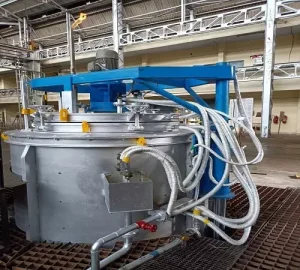
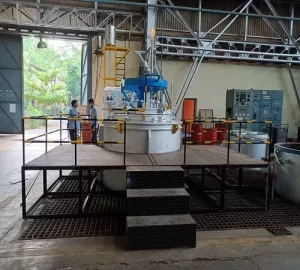
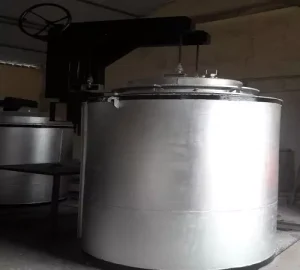
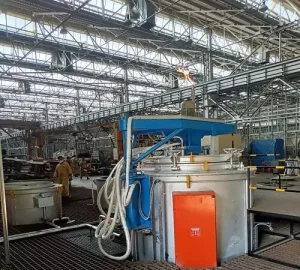
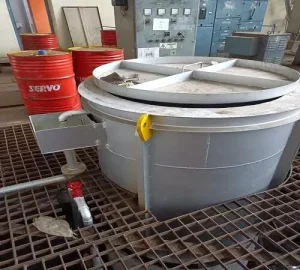
What Are Pit Furnaces?
Pit Furnaces are vertical heat treatment furnaces installed below ground level. Instead of loading parts horizontally, you suspend them vertically inside the furnace chamber.
What actually happens is:
- Components are lowered into the furnace using an EOT crane
- The furnace lid is closed and sealed
- Heat treatment starts under controlled conditions
This vertical design is not just for convenience—it directly improves heat distribution and handling.
Why Pit Furnaces Are Preferred for Heavy Components
In real production, handling is often the biggest challenge—not heating.
Pit furnaces make it easier to:
- Load long shafts without bending
- Process heavy components without complex fixtures
- Maintain alignment during heating
One common issue I’ve seen is distortion in long parts when placed horizontally. Vertical loading in pit furnaces reduces that risk significantly.
How Pit Furnaces Work in Practice
1. Loading and Charging the Furnace
Operators use cranes to load materials into the furnace. Since the furnace is below ground level:
- Loading is safer
- Positioning is more accurate
You don’t have to force parts into a hot chamber, which reduces both risk and time.
2. Heating System and Temperature Control
Pit furnaces can be:
- Electrically heated
- Gas-fired or oil-fired
In electrically heated systems:
- Heating elements are placed along the side walls
- Heat is distributed evenly across zones
In fuel-fired systems:
- High-efficiency burners generate heat
- Combustion systems control temperature precisely
What actually happens is the furnace maintains stable temperatures across the entire load, which is critical for proper heat treatment.
3. Multi-Zone Temperature Control
Modern pit furnaces divide the chamber into multiple heating zones.
This allows:
- Precise temperature control
- Uniform heating from top to bottom
From experience, this is crucial when processing large loads. Without proper zoning, the top and bottom temperatures can vary, leading to inconsistent results.
4. Atmosphere Control in Pit Furnaces
Depending on the process, pit furnaces can operate in:
- Oxidizing atmosphere
- Neutral atmosphere
- Reducing or controlled atmosphere
For controlled processes like carburizing or nitriding:
- Gases such as nitrogen, ammonia, or hydrocarbon gases are introduced
- A sealed retort maintains the internal atmosphere
One common issue I’ve seen is oxidation in open furnaces. A properly sealed pit furnace prevents scaling and improves surface finish.
5. Circulation System for Uniform Heating
Heat alone is not enough—you need proper circulation.
Pit furnaces use:
- Axial or centrifugal fans
- Recirculation systems
What actually happens is hot air moves continuously around the load, ensuring:
- Even temperature distribution
- Faster heat transfer
- Reduced cycle time
Without this, you’d get hot and cold spots inside the furnace.
Key Heat Treatment Processes Using Pit Furnaces
Pit Furnaces support a wide range of processes, including:
- Annealing
- Normalizing
- Hardening
- Tempering
- Carburizing
- Carbonitriding
- Gas nitriding
- Stress relieving
- Case hardening
In real production, this versatility makes pit furnaces a valuable investment.
Where Pit Furnaces Are Used in Industry
From what I’ve seen, pit furnaces are widely used in:
- Steel industries
- Forging units
- Gear manufacturing
- Bearing production
- Fastener industries
- Aluminium component manufacturing
Typical components include:
- Shafts
- Rolls
- Gears
- Wire coils
- Piston rings
These are not small parts. They require stable heating and careful handling—exactly what pit furnaces provide.
Construction Features That Matter
✔ Strong Insulation
Pit furnaces use:
- Ceramic fibre modules
- Refractory brick lining
This helps:
- Retain heat
- Improve energy efficiency
- Maintain lower external surface temperature
✔ Leak-Tight Sealing
For controlled atmosphere processes:
- Furnace lids are sealed using special materials
- Gas leakage is minimized
This ensures:
- Stable internal conditions
- Better process control
✔ Robust Design for Heavy Loads
The furnace bottom is built using:
- High-strength refractory materials
- Load-bearing insulation
In real production, this matters a lot. Poor design can lead to structural failure under heavy loads.
✔ Advanced Control Systems
Modern pit furnaces include:
- PLC-based automation
- SCADA monitoring
- Programmable temperature control
From a practical standpoint:
- Operators get consistent results
- Data logging improves quality tracking
- Human error reduces significantly
Advantages of Pit Furnaces in Manufacturing
1. Uniform Heating for Large Components
Vertical design ensures even heat distribution.
2. Reduced Distortion
Long parts stay straight during processing.
3. High Load Capacity
Can handle heavy loads (even up to 100 MT in some cases).
4. Flexible Applications
Supports multiple heat treatment processes.
5. Improved Surface Quality
Controlled atmosphere reduces oxidation.
6. Better Safety
Loading happens outside the hot zone using cranes.
Real Challenges (And Practical Solutions)
Let’s be honest—no furnace is perfect.
Some challenges include:
- Handling very high loads
- Maintaining uniformity in very deep chambers
- Retort wear in controlled atmosphere systems
But with:
- Proper design
- Regular maintenance
- Correct operation
These issues can be managed effectively.