
Batch Ovens
Have you ever wondered how industries heat treat, cure, dry, or age heavy components with complete control and uniform results?
Modern Batch Ovens play a key role in industrial thermal processing. Industries rely on these systems to handle large and heavy products with consistent temperature distribution. From aerospace parts to aluminum coils, these ovens ensure safe and effective heating processes.
At JrFurnace, we design and manufacture high-quality industrial systems that meet strict production needs. Our focus remains on performance, durability, and long-term reliability.
Understanding Industrial Batch Ovens
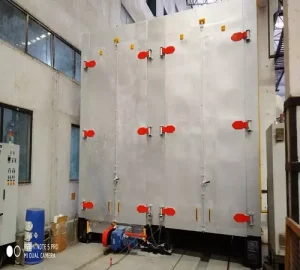
Industrial Batch Ovens are enclosed heating chambers used for thermal processing applications. Operators load products into the chamber, run a heating cycle, and remove them after completion. This method allows complete temperature control and flexibility for different product sizes.
Unlike continuous ovens, batch systems process materials in individual loads. This approach works best when handling multiple large products or varied production cycles.
Key Design Features
- Custom length, height, and width combinations
- Roof-mounted equipment or rear-mounted components
- Uniform airflow system
- Heavy-duty insulation
- Advanced temperature control panels
- Energy-efficient heating elements
These features help industries maintain product quality while reducing energy waste.
Applications Across Industries
Industrial heating requirements vary across sectors. Batch Ovens support a wide range of industries by offering stable temperature control and repeatable results.
Aerospace and Composites
Aerospace manufacturers depend on controlled heating for curing composites and stress relieving structural parts. Consistent heat ensures material strength and safety.
Automotive
Automotive plants use these ovens for curing coatings, powder coating, and preheating metal parts before assembly. Proper heat treatment increases durability and performance.
Electric Motor & Transformers
Manufacturers apply controlled heat for drying windings and curing insulation materials. This process improves efficiency and lifespan.
Foundry Heat Treating
Foundries use industrial batch process ovens for annealing, tempering, and stress relieving cast components. Uniform heat treatment prevents cracks and structural weakness.
Thermal Processes Supported
Industrial production involves several heating processes. These ovens support multiple operations within one system.
Common Thermal Applications
| Process | Purpose | Industry Use |
| Aluminum Ageing | Improves strength of aluminum alloys | Electrical & Construction |
| Heat-Treating | Enhances hardness and durability | Automotive & Foundry |
| Curing Coatings | Hardens surface finishes | Automotive |
| Curing Resins and Epoxies | Strengthens bonded materials | Aerospace |
| Drying | Removes moisture | Electrical |
| Preheating | Prepares metals before forming | Manufacturing |
| Annealing | Softens metals for reshaping | Foundry |
| Shrink-Fitting | Expands metal for assembly | Industrial |
| Powder Coating | Applies durable surface layer | Automotive |
| Stress Relieving | Reduces internal stress | Heavy Equipment |
| Tempering | Improves toughness | Metal Processing |
| Ageing of AAAC Conductors | Strengthens aluminum conductors | Electrical Industry |
Each process requires precise temperature control, and modern systems deliver that accuracy.
Why Industries Prefer Batch Heating Systems
Many industries prefer this system because it offers flexibility and control. Operators can adjust temperature, timing, and airflow depending on product requirements.
Benefits at a Glance
- Consistent heat distribution
- Reduced material distortion
- Improved product strength
- Energy-efficient operation
- Custom-built configurations
- Safe and reliable performance
“Uniform heating leads to stronger products and fewer production errors.”
This simple principle drives industrial success.
Custom Manufacturing Approach
Every production facility has different needs. JrFurnace manufactures systems in virtually any size combination. Whether industries require roof-mounted heating equipment or back-end mounted components, our design team ensures smooth integration with existing workflows.
Construction Highlights
Heavy-Duty Structure
We use strong materials to withstand high temperatures and long operating hours.
Advanced Control System
Digital controllers maintain precise thermal cycles.
Efficient Air Circulation
Balanced airflow ensures even temperature throughout the chamber.
Performance in Aluminum Processing
Aluminum ageing and annealing demand accurate heat control. Industries load aluminium alloy wire on drums or AAAC conductors for ageing cycles. The system maintains consistent temperature for the required duration, strengthening the material without causing damage.
Proper aluminium ageing improves conductivity and mechanical properties.
This process is critical in electrical and construction sectors.
Safety and Quality Commitment
JrFurnace remains committed to high manufacturing standards. Our team focuses on quality materials, strict inspection, and dependable service support.
What Sets Our Systems Apart
- Reliable temperature accuracy
- Durable insulation design
- Easy maintenance access
- Long operational life
- Expert technical support
We understand that industrial downtime affects production targets. That is why we build systems that operate smoothly and consistently.
Frequently Asked Questions
What are Batch Ovens used for?
They are used for heat-treating, curing, drying, annealing, tempering, powder coating, and aluminum ageing processes across industries.
How do industrial batch process ovens differ from continuous ovens?
Batch systems process one load at a time, offering flexibility and precise control, while continuous ovens move products through a heating tunnel.
Can these ovens handle large products?
Yes. They are primarily designed for thermal processing of multiple large products with custom size configurations.
Are they energy efficient?
Modern designs include insulation and airflow systems that reduce energy loss and improve heating efficiency.