
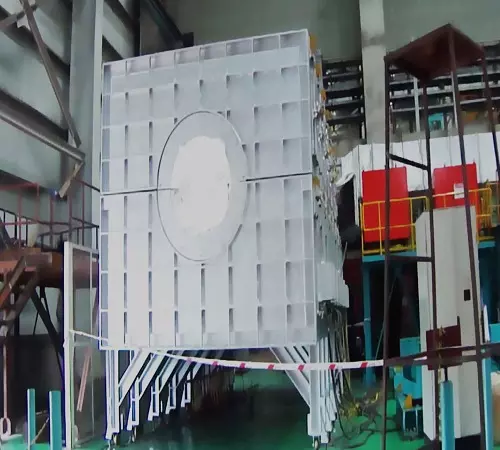
Industrial heat treat furnace – Why Is It Essential in Modern Manufacturing?
When industries want stronger, harder, and longer-lasting metal components, they often ask one key question: what is heat treatment furnace and how does it improve metal performance?
An industrial heat treat furnace plays a critical role in manufacturing because it controls temperature, heating time, and cooling conditions to improve the mechanical properties of metals. Industries such as automotive, aerospace, engineering, and tool manufacturing rely heavily on these systems.
At JR Furnace, advanced systems are designed to ensure accurate temperature control, uniform heating, and reliable results in every heat treatment furnace process. A properly designed industrial heating furnace ensures consistent metallurgical properties while improving productivity and energy efficiency.
“Heat treatment transforms raw metal into reliable industrial components by controlling heat and cooling cycles.”
What Is Heat Treatment Furnace?
A heat treatment furnace is an industrial system used to heat metals to a specific temperature and then cool them under controlled conditions to change their physical and mechanical properties.
The process can increase hardness, improve ductility, reduce internal stress, and enhance wear resistance.
Key Features of an Industrial Heat Treat Furnace
- High temperature capability
- Uniform heating zones
- Precise temperature control
- Controlled atmosphere systems
- Energy efficient operation
Because of these capabilities, industrial heat treat furnace manufacturers continue to improve furnace technology to meet modern production demands.
Heat Treatment Furnace Process
The heat treatment furnace process involves several carefully controlled stages that ensure the metal achieves the required properties.
Main Stages in the Process
- Heating
- Soaking
- Cooling
Step-by-Step Process
- Heating Stage
The metal is heated inside the industrial heat treat furnace to a specific temperature. - Soaking Stage
The material remains at this temperature for a certain time so the heat spreads evenly. - Cooling Stage
Controlled cooling takes place through air, oil, water, or gas quenching depending on the application.
Each stage must be precisely controlled to maintain consistent product quality.
Types of Heat Treatment Furnaces
There are several types of heat treatment furnaces used across industries. The selection depends on production volume, material type, and process requirements.
Common Heat Treatment Furnace Types
- Batch furnace
- Continuous furnace
- Gas fired heat treatment furnace
- Vacuum furnace
- Bogie hearth furnace
- Mesh belt furnace
These heat treatment furnace types allow industries to perform processes such as annealing, hardening, tempering, and stress relieving.
Continuous Heat Treatment Furnace Manufacturers in India
Many industries require continuous production instead of batch operations. In such cases, continuous systems are preferred.
Continuous heat treatment furnace manufacturers in India provide equipment that allows materials to move through different heating zones automatically.
Advantages of Continuous Furnaces
- Higher production capacity
- Uniform heating results
- Reduced labor requirements
- Consistent metallurgical properties
These systems are widely used in automotive component production and wire processing industries.
Gas Fired Heat Treatment Furnace
A gas fired heat treatment furnace uses fuel such as natural gas or LPG to generate heat. These furnaces are commonly used when large heating capacities are required.
Benefits
- Lower operating cost
- High heating efficiency
- Suitable for large industrial components
- Reliable performance for heavy duty applications
Gas based furnaces are widely used in forging units and steel processing industries.
Industrial Heat Treat Furnace for Sale – What Industries Should Consider
When industries look for an industrial heat treat furnace for sale, several important technical factors must be evaluated.
Important Selection Factors
- Furnace temperature range
- Heating method
- Production capacity
- Furnace insulation quality
- Automation level
- Energy efficiency
A well designed industrial heat treat oven can significantly improve product quality while reducing operational costs.
Heat Treatment Furnace Diagram
A typical heat treatment furnace diagram includes several important components that work together to perform the heat treatment process.
Major Furnace Components
- Heating chamber
- Heating elements or burners
- Temperature control system
- Insulation lining
- Loading system
- Exhaust system
These components ensure proper heat distribution inside the industrial heating furnace.
Heat Treatment Furnace Design
Modern heat treatment furnace design focuses on efficiency, safety, and consistent metallurgical performance.
Design Considerations
- Uniform heat distribution
- Energy efficient insulation
- Advanced control systems
- Safety mechanisms
- Durable furnace structure
At JR Furnace, engineers design systems that deliver accurate thermal performance and long operational life.
Heat Treatment Furnace Price in India
The heat treatment furnace price in India varies depending on several factors including size, temperature capacity, and automation level.
Factors Affecting Price
| Factor | Description |
| Furnace size | Larger furnaces cost more |
| Temperature capacity | Higher temperature systems require special materials |
| Automation | Advanced control systems increase price |
| Heating type | Electric or gas fired designs affect cost |
| Custom design | Special applications require custom engineering |
Because of these variations, the heat treatment furnace price may differ based on industrial requirements.
Heat Treatment Furnace Manufacturers in India
India has a growing manufacturing sector that requires reliable furnace technology. As a result, heat treatment furnace manufacturers in India continue to develop advanced systems for different industries.
Industries Using Heat Treatment Furnaces
- Automotive manufacturing
- Aerospace components
- Steel processing plants
- Tool and die manufacturing
- Engineering industries
Reliable industrial heat treat furnace manufacturers help these sectors maintain high product quality and production efficiency.
Role of Industrial Heat Treat Furnace in Metal Processing
An industrial heat treat furnace is not only used for hardening metals but also for improving overall product performance.
Key Applications
- Annealing
- Tempering
- Hardening
- Stress relieving
- Normalizing
These processes help improve durability, machinability, and resistance to wear.
Annealing in Heat Treatment Furnaces
Annealing is one of the most common heat treatment processes performed inside an industrial heat treat furnace.
Purpose of Annealing
- Reduce internal stresses
- Improve ductility
- Increase machinability
- Refine grain structure
This process involves heating metal to a specific temperature and then allowing it to cool slowly inside the furnace.
Frequently Asked Questions
What is heat treatment furnace?
A heat treatment furnace is an industrial heating system used to change the physical and mechanical properties of metals through controlled heating and cooling cycles.
What industries use industrial heat treat furnace systems?
Industries such as automotive, aerospace, steel processing, and engineering manufacturing widely use these furnaces.
What affects heat treatment furnace price in India?
The heat treatment furnace price in India depends on furnace size, heating method, temperature range, and automation level.
What are the main heat treatment furnace types?
Common heat treatment furnace types include batch furnaces, continuous furnaces, gas fired furnaces, vacuum furnaces, and mesh belt furnaces.
Why is furnace design important?
A good heat treatment furnace design ensures uniform heating, energy efficiency, safety, and consistent metallurgical results.
Industrial heat treat furnace – The Backbone of Metal Heat Treatment
Modern industries depend on advanced industrial heat treat furnace systems to improve metal performance and production reliability. From industrial heat treat ovens to large industrial heating furnace systems, these technologies continue to support manufacturing growth across multiple sectors.
With innovations in heat treatment furnace design, improved automation, and energy-efficient systems, manufacturers can achieve better product quality and higher production efficiency.