
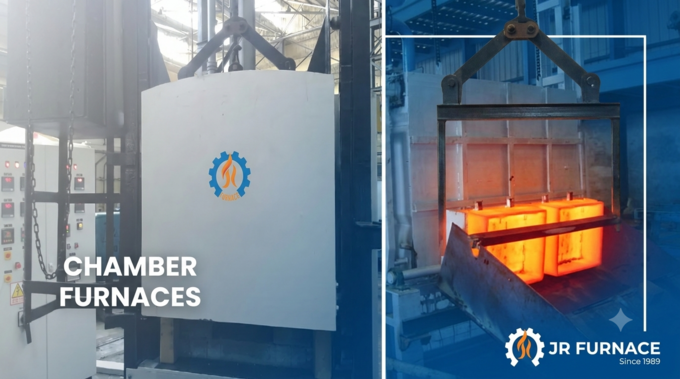
When materials or components require regulated heating at a particular temperature for a predetermined amount of time, an industrial chamber furnace is frequently utilized. A chamber furnace offers an enclosed working area where temperature, heating time, and operating conditions can be adjusted in accordance with process requirements, in contrast to basic heating equipment.
Chamber furnaces are used for various heating applications in the forging, heat treatment, casting, engineering, automotive component, and metal processing industries. The necessary temperature range, chamber size, fuel or electrical heating system, loading configuration, and production capacity can all be taken into consideration while designing the furnace.
Because the same furnace may frequently be used for several heating cycles by modifying the process parameters, an industrial chamber furnace might be a feasible option for manufacturers handling diverse batches of components.
An Industrial Chamber Furnace: What Is It?
A heat processing furnace with an enclosed chamber where materials are heated under regulated circumstances is called an industrial chamber furnace. To prevent heat loss and keep the furnace at the proper temperature, the chamber is typically insulated with heat-resistant insulation.
Chamber furnaces can use gas burners, electric heating components, or various heating configurations, depending on the application. Throughout the heating cycle, operators may monitor and maintain the necessary temperature with the aid of thermocouples and temperature controllers.
The dimensions of the components, batch weight, heating temperature, and production needs all influence the chamber size and furnace design. Because of this, chamber furnaces can be used for both specialized heat treatment activities and general industrial heating.
How Does a Chamber Furnace Work?
The operating principle is straightforward. Components are loaded into the furnace chamber and the heating system raises the temperature to the required level. Once the set temperature is reached, the furnace maintains the required conditions for the specified holding time.
The basic heating cycle generally involves:
- Loading – Components are placed inside the furnace chamber.
- Heating – The heating system gradually increases the chamber temperature.
- Soaking – The material remains at the specified temperature for the required duration.
- Process completion – Depending on the application, components are removed for cooling or transferred to the next stage.
A properly designed industrial chamber furnace helps maintain uniform heating throughout the working zone. Good insulation, suitable heating element placement and accurate temperature measurement all contribute to consistent results.
Where Are Industrial Chamber Furnaces Used?
Chamber furnaces are used across several manufacturing sectors because they can accommodate different component shapes and batch sizes.
Common applications include:
Forging Operations
Before forging, metal components often need to be heated to a suitable temperature to improve their formability. Chamber furnaces can be used for heating billets, bars, blocks and other components before forging.
Heat Treatment
An industrial chamber furnace can be configured for processes such as annealing, normalising, hardening and stress relieving, depending on the required temperature and furnace design.
Metal Processing
Foundries and engineering industries use chamber furnaces for heating and thermal processing of various metal components.
Tool and Component Heating
Industrial components, tools and fabricated parts may require controlled heating before further manufacturing or treatment operations.
General Batch Heating
Where production involves different components rather than a continuous production line, a chamber furnace provides flexibility for batch-wise processing.
Important Features to Consider
Choosing a furnace only by its maximum temperature is not enough. The furnace should match the actual production process and operating conditions.
Working Temperature
The required operating temperature determines the furnace construction, insulation and heating system. The maximum temperature should provide an appropriate margin above the normal process temperature.
Chamber Size
The chamber should provide enough space for the components while allowing effective circulation and heat distribution. An unnecessarily large chamber can also increase energy consumption.
Heating System
Electric and gas-fired configurations are commonly used in industrial applications. The selection depends on available utilities, production requirements, temperature range and operating cost.
Temperature Uniformity
Consistent temperature throughout the working zone is important when components require uniform heating. Furnace design, insulation and heating element arrangement all influence temperature uniformity.
Temperature Control
A suitable control system allows operators to set and monitor the required heating cycle. Accurate temperature sensing helps maintain process consistency from one batch to another.
Loading Arrangement
Depending on component weight and dimensions, the furnace may require manual loading, trays, trolleys or other loading arrangements. The loading system should be considered during furnace selection.
Benefits of Using an Industrial Chamber Furnace
One of the main advantages of an industrial chamber furnace is its flexibility. It can be designed for different batch sizes and heating requirements, making it useful for industries that process a variety of components.
Other benefits include:
- Controlled heating for batch operations
- Suitable for different component sizes and shapes
- Adjustable temperature and holding cycles
- Robust construction for industrial environments
- Options for electric or gas heating
- Good insulation to reduce unnecessary heat loss
- Suitable for different heat treatment and heating applications
- Easy integration with temperature monitoring and control systems
The actual performance depends on furnace design, operating conditions, loading pattern and the process being carried out.
Electric or Gas-Fired Chamber Furnace?
The choice between electric and gas heating depends on the application.
Electric chamber furnaces are often preferred where accurate temperature control and clean heating conditions are important. They can be suitable for laboratories, engineering production and heat treatment applications where precise control is required.
Gas-fired chamber furnaces can be considered for applications involving larger chambers, higher production loads or processes where gas is readily available. Burner arrangement and furnace design play an important role in achieving proper heat distribution.
There is no single heating system that is suitable for every application. The furnace should be selected according to temperature requirements, component size, production quantity, energy availability and operating conditions.
How to Select the Right Chamber Furnace
Before purchasing an industrial chamber furnace, manufacturers should clearly define the process requirements.
Consider the following points:
- What material will be heated?
- What is the required operating temperature?
- What is the maximum component size?
- How much material will be loaded in one batch?
- How many batches are required per day?
- Is electric or gas heating more practical?
- What temperature uniformity is required?
- What type of loading system is suitable?
- Does the process require a controlled atmosphere?
- What cooling or post-heating process will be used?
Providing these details to the furnace manufacturer makes it easier to determine the appropriate chamber dimensions, heating capacity, insulation, controls and construction.
Industrial Chamber Furnace for Different Manufacturing Requirements
Every manufacturing plant has different production conditions. A small engineering workshop may require a compact furnace for occasional batch heating, while an automotive or heavy engineering manufacturer may need a larger furnace capable of handling substantial component loads.
For this reason, chamber furnaces are commonly designed with different chamber dimensions, temperature ranges, heating capacities and control configurations.
A customised industrial chamber furnace can therefore be developed around the customer’s component size, batch weight, heating cycle and production requirements rather than using the same configuration for every application.
Why Furnace Design Matters
Good furnace performance depends on more than the heating source. Insulation quality, chamber construction, heating element or burner positioning, temperature sensors and control systems all work together during operation.
Poor heat distribution can result in unevenly heated components, while inadequate insulation can increase heat loss and operating costs. Correct furnace sizing is also important because the equipment should provide enough working capacity without creating unnecessary heating volume.
For industrial users, the right combination of furnace construction and process control can make a significant difference to repeatability and production efficiency.
Industrial Chamber Furnace Manufacturer in India
JR Furnace & Ovens (P) Ltd. designs and manufactures industrial heating and heat treatment equipment for different manufacturing requirements. The company provides furnace solutions based on factors such as operating temperature, component dimensions, batch capacity, heating method and process requirements.
For companies looking for an industrial chamber furnace, discussing the application with the manufacturer before finalising the furnace configuration is important. Details such as material type, component size, batch weight, operating temperature and production cycle help determine a suitable furnace design.
Conclusion
A flexible option for regulated batch heating and thermal processing is an industrial chamber furnace. It can be used for a variety of tasks, from heat treatment and general industrial heating to forging and metal processing, thanks to its enclosed working chamber, temperature control, and adaptable layout.
Instead of just picking the largest chamber or the greatest temperature, the proper furnace should be chosen based on the real production requirements. Before installation, the following factors should be taken into account: working temperature, chamber dimensions, batch weight, heating method, temperature uniformity, and loading arrangement.
Manufacturers can create a dependable thermal processing operation and obtain more consistent heating outcomes with the right furnace design and operating settings.
Common Questions
- What is the purpose of an industrial chamber furnace?
Metals and other materials are heated under regulated conditions using an industrial chamber furnace. Forging, annealing, normalizing, hardening, relieving stress, and general batch heating are common uses.
- Which chamber furnace heating systems are available?
Gas-fired or electric heating systems can be included into chamber furnace designs. The process temperature, production needs, available utilities, and operational circumstances all influence the best choice.
- Is it possible to customize a chamber furnace?
It is possible to configure chamber size, operating temperature, heating capacity, insulation, controls, and loading arrangements in accordance with the production and process needs of the customer.
- How can I pick the best chamber furnace?
Start with the material, required temperature, component dimensions, batch weight, number of batches, heating cycle and preferred heating method. These details help the manufacturer recommend a suitable furnace configuration.