
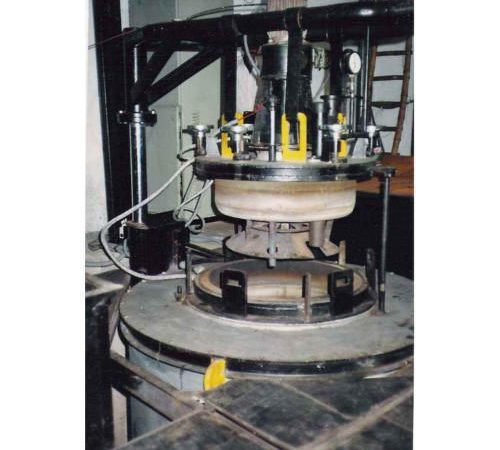
In real production, surface failure is one of the most common reasons components don’t last as expected. I’ve seen gears wear out early, shafts lose strength under cyclic loads, and tooling fail right when production demand peaks. That’s exactly where nitriding furnaces have started to make a real difference in modern heat treatment.
Today, industries are not just looking for hardness—they want controlled performance, longer service life, and dimensional stability. A properly designed nitriding furnace delivers all three, and that’s why it has become essential rather than optional.
What Is Nitriding Furnace and Why Does It Matter?
Nitriding Furnace is a thermochemical heat treatment process where nitrogen diffuses into the surface of steel at relatively low temperatures, typically between 500°C and 550°C.
What actually happens is simple in theory but powerful in results. Nitrogen reacts with alloying elements like chromium, molybdenum, and aluminum to form hard nitrides. This creates a tough surface layer while keeping the core of the material ductile.
In practical terms, this means:
- The surface becomes extremely hard
- The core remains strong and flexible
- The component handles fatigue much better
One thing I’ve noticed in production is that nitrided parts often outlast conventionally treated parts by a significant margin, especially in high-wear environments.

Why Nitriding Furnaces Are Gaining Importance
1. Longer Component Life in Real Conditions
In industries like automotive or heavy engineering, parts operate under continuous stress. Traditional heat treatment methods improve hardness, but they don’t always address wear and fatigue together.
A nitriding furnace creates a hardened surface layer that resists wear while also improving fatigue strength. Components like gears, crankshafts, dies, and piston rods benefit the most.
In real production, this translates to:
- Fewer breakdowns
- Lower replacement frequency
- Better reliability in operation
2. Minimal Distortion and Better Accuracy
One common issue I’ve seen with high-temperature processes like carburizing is distortion. Parts often require additional machining after heat treatment, which increases cost and delays.
Nitriding solves this problem because it operates at lower temperatures. The structure of the material remains stable, and dimensional changes stay minimal.
For industries dealing with precision components, this is a big advantage:
- Less rework
- Better tolerance control
- Improved consistency across batches
3. Consistent and Repeatable Results
Modern nitriding furnaces use automated control systems to manage temperature, gas flow, and nitrogen potential. This ensures the same results every cycle.
From an operator’s perspective, this consistency is critical. Once the process parameters are set correctly, you can achieve:
- Uniform case depth
- Controlled compound layer
- Repeatable hardness values
This level of control reduces human error and improves overall production quality.
4. Energy Efficiency and Cost Control
Energy consumption is a major concern in any heat treatment shop. High-temperature furnaces consume more fuel and often result in higher operating costs.
Nitriding furnaces operate at comparatively lower temperatures, which naturally reduces energy usage. In addition, modern systems come with:
- Efficient insulation
- Controlled atmosphere systems
- Optimized heating cycles
Over time, these factors lead to noticeable savings in:
- Power consumption
- Gas usage
- Maintenance costs
5. Better Surface Properties Without Additional Processes
In some cases, manufacturers rely on coatings or additional treatments to improve surface performance. These steps add complexity and cost.
Nitriding eliminates the need for many of these secondary processes. The surface itself becomes:
- Wear-resistant
- Corrosion-resistant
- Fatigue-resistant
This simplifies the production cycle and improves overall efficiency.
Applications Where Nitriding Furnaces Make a Difference
Nitriding furnaces are widely used across multiple industries, and for good reason. They handle a variety of components with precision and consistency.
Automotive Industry
- Gears
- Camshafts
- Crankshafts
- Fuel injection components
Tool and Die Manufacturing
- Dies
- Moulds
- Cutting tools
Aerospace and Defence
- High-performance mechanical parts
- Components exposed to extreme stress
General Engineering
- Bearings
- Shafts
- Fasteners
In each of these applications, the goal remains the same—improve surface durability without compromising the core strength.
How Modern Nitriding Furnaces Improve Operations
The design of modern nitriding furnaces has evolved significantly. It’s no longer just about heating and cooling.
Controlled Atmosphere Processing
A well-sealed retort ensures that the nitriding atmosphere remains stable. This directly affects the quality of the surface layer.
Automation and Process Control
PLC-based systems allow operators to:
- Program cycles
- Monitor parameters
- Maintain consistency
Durable Construction
Furnaces are built using high-grade materials to withstand continuous industrial use. This ensures long service life and minimal downtime.
From experience, a well-built furnace not only improves output but also reduces unexpected production interruptions.
Why Industries Prefer JR Furnace
When it comes to selecting a nitriding furnace, reliability matters more than anything else. JR Furnace focuses on practical industrial requirements rather than just theoretical design.
What stands out in real usage:
- Stable temperature control across the chamber
- Strong sealing for accurate atmosphere control
- Consistent performance in long production cycles
JR Furnace systems are designed keeping actual shop floor challenges in mind. That includes ease of operation, low maintenance needs, and long-term durability.