
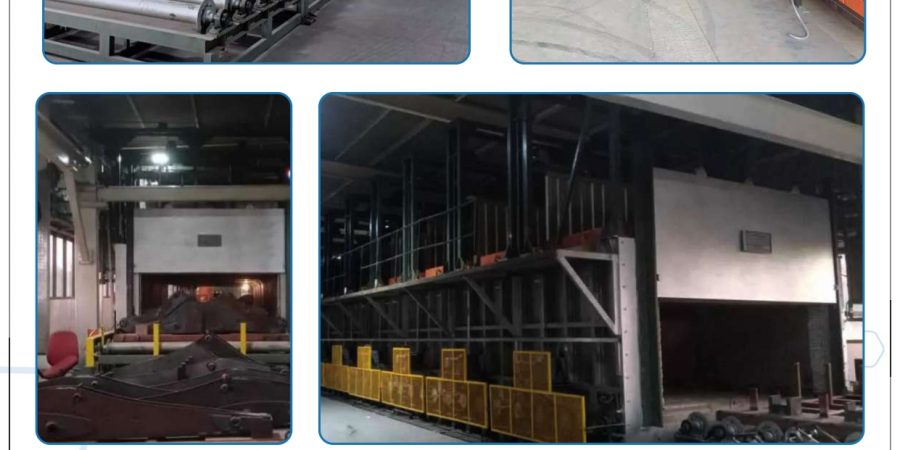
If you’ve ever worked on a production floor, you already know this—pushing for higher output usually comes with a trade-off. Either quality drops, or the process becomes unstable. I’ve seen it happen in many setups where batch furnaces struggle to keep up.
But roller hearth furnaces work differently.
They are built for continuous movement, and that changes how both speed and quality are handled. Instead of forcing faster production, the system is designed to keep everything balanced from the start.
Let’s break this down in a practical way.
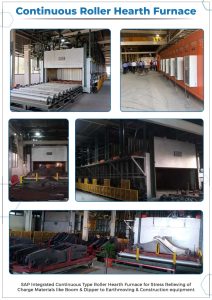
What Actually Makes Roller Hearth Furnaces So Fast?
The biggest difference is simple: they don’t stop.
In real production, stopping and starting a furnace again is where you lose time. Batch systems need loading, heating, soaking, unloading… and then the cycle repeats. That gap between cycles slows everything down.
With a roller hearth furnace, components move continuously on rollers. One end feeds material in, and the other end delivers finished parts.
No waiting. No repeated heating cycles.
That steady flow alone increases throughput more than most people expect.
Speed Is Controlled, Not Forced
One common issue I’ve seen is operators trying to increase production by simply pushing materials faster through the furnace. That usually leads to uneven heating.
Roller hearth furnaces don’t work like that.
Here, speed is part of the process design. The roller movement is synchronized with the heating requirement. If a component needs more soaking time, the speed is adjusted accordingly.
What actually happens is the furnace controls the pace—not the operator trying to rush output.
That’s why you get both speed and consistency at the same time.
Multi-Zone Heating Keeps Everything Stable
Another major reason these furnaces maintain quality is how heating is handled.
Instead of exposing materials to one uniform temperature, the furnace is divided into zones:
Entry or preheating zone
Heating zone
Holding zone
Slow cooling or rapid cooling zone
Each zone has its own temperature setting.
In real production, this staged heating makes a huge difference. Materials don’t face thermal shock, and internal stresses are minimized. The transformation happens gradually, which is exactly what you want in heat treatment.
Uniform Heat Distribution Is Not Just a Claim
A lot of systems promise uniform heating, but in practice, it’s not easy to achieve.
With roller hearth furnaces, uniformity comes naturally because:
Every component travels the same path
Exposure time remains consistent
Heat distribution is controlled across zones
There’s no guesswork.
One common issue I’ve seen in older systems is uneven hardness in components from the same batch. That usually comes from temperature variation. Roller hearth systems reduce that problem significantly.
Controlled Atmosphere Protects the Material
For processes like annealing or brazing, the atmosphere inside the furnace matters just as much as temperature.
If oxygen levels are not controlled, oxidation can damage the surface. That leads to rework or rejection.
Roller hearth furnaces can operate under controlled atmospheres such as reducing or neutral environments.
For example, when working with bearings, annealing under a controlled atmosphere prevents unwanted reactions on the surface. The result is cleaner, more reliable output.
Built for Heavy Loads and Continuous Use
These furnaces are not just fast—they’re designed to handle real industrial conditions.
You can process:
Forging parts
Bearings
Semi-finished components
Large and heavy materials
The roller system is built to carry weight without affecting movement. At the same time, the furnace structure uses proper insulation and refractory materials to handle long operating hours.
In real production, durability matters just as much as performance.
Automation Keeps the Process Consistent
Another thing that helps maintain quality is automation.
Modern roller hearth furnaces come with:
Programmable temperature controllers
PLC systems
SCADA and HMI interfaces
These systems monitor temperature, speed, and timing continuously.
What actually happens is small variations are corrected instantly, without waiting for manual intervention. That keeps the process stable even during long production runs.
Energy Efficiency Supports Continuous Operation
At first, running a furnace continuously might sound expensive. But in reality, it’s often more efficient than batch systems.
Here’s why:
The furnace doesn’t cool down between cycles
Heat is retained using proper insulation
Energy loss is minimized
Over time, this reduces overall energy consumption. It also helps maintain a stable internal temperature, which again supports better quality.
Less Handling Means Fewer Errors
Handling materials multiple times increases the chances of damage. It also slows things down.
With roller hearth furnaces, materials move automatically from entry to exit. There’s very little manual involvement.
In real production, this reduces:
Human error
Surface damage
Delays in processing
It’s a small detail, but it makes a big impact on both speed and consistency.
Key Features That Support Performance
To understand the capability better, here are some important specifications:
Temperature Range: Up to 1200°C
Insulation: Ceramic fibre boards, blankets, or refractory brick lining
Heating Options: Electric, gas-fired, or oil-fired
Heating Elements: Nichrome wire, alloy resistance wire, silicon carbide rods
Furnace Classification: Class 2 / Class 3
Instrumentation: PLC, SCADA, temperature controllers, recorders
These features allow the furnace to handle different materials and processes without compromising stability.
Where Roller Hearth Furnaces Are Used
You’ll commonly find these furnaces in industries where both volume and precision matter.
Typical applications include:
Isothermal annealing
Stress relieving
Case hardening
Brazing
In brazing operations, especially copper brazing, controlled atmosphere helps prevent oxidation and improves joint quality. In many cases, this also reduces overall production cost.
Why Manufacturers Prefer This System
From what I’ve seen, the main reason manufacturers choose roller hearth furnaces is simple—they reduce uncertainty.
You don’t have to constantly adjust settings or worry about uneven results. Once the system is set correctly, it runs consistently.
That reliability is what allows higher production speeds without sacrificing quality.