
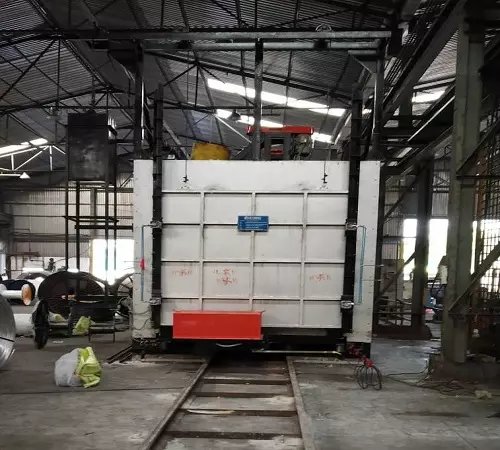
In steel strip production, I’ve seen one thing again and again—consistency decides everything. You can have good raw material, skilled operators, and solid downstream processes, but if annealing is not controlled properly, the final product will always show variation. That’s exactly where a Continuous Annealing Furnace Manufacturer for Steel Processing plays a critical role.
In real production environments, manufacturers don’t just look for heating equipment. They look for stability, repeatability, and the ability to run long production cycles without constant intervention. A well-designed continuous annealing system delivers exactly that.
Why Steel Processing Needs Continuous Annealing Today
Steel applications have changed a lot over the years. Earlier, batch processing worked fine for limited volumes. Today, industries like automotive, appliances, and precision engineering demand uniform mechanical properties across entire coils.
What actually happens in batch furnaces is uneven heating and cooling between different loads. One coil behaves slightly differently from another. Over time, that variation creates rejection, rework, and production delays.
Continuous annealing solves this problem by creating a steady, controlled process. Instead of treating steel in batches, the strip moves continuously through different temperature zones. This ensures every section of the strip receives the same thermal history.
From what I’ve observed on plant floors, this shift alone improves both productivity and product quality in a noticeable way.
What Is a Continuous Annealing Furnace in Practical Terms?
A continuous annealing furnace is not just a furnace—it’s a complete processing line. Cold-rolled steel enters from one end and exits with refined mechanical properties from the other.
The process happens in stages, but in real operation, it feels like one smooth flow.
First comes the heating section. Here, the strip temperature rises quickly but in a controlled manner. If the heating rate goes too fast, it can create internal stress. If it goes too slow, production efficiency drops.
Then comes the soaking zone. This is where the real transformation happens. The steel structure reorganizes itself, improving ductility and reducing hardness. One common issue I’ve seen is improper soaking time. If operators rush this stage, the material doesn’t fully recrystallize, and the final properties become inconsistent.
After that, the strip moves into the cooling section. Cooling is just as critical as heating. Controlled cooling helps achieve the desired grain structure. Sudden cooling can make the material brittle, while slow cooling may not meet strength requirements.
A reliable Continuous Annealing Furnace Manufacturer for Steel Processing understands how to balance all these stages properly.
What Makes a Good Continuous Annealing Furnace Manufacturer
From experience, not all furnace systems perform the same, even if specifications look similar on paper.
A good manufacturer focuses on how the system behaves during actual production, not just during testing.
Temperature uniformity is one of the first things I check. If the furnace cannot maintain consistent temperature across the strip width, edge defects start appearing. Over time, this leads to customer complaints, especially in automotive applications.
Another important factor is atmosphere control. In continuous annealing, protective gases like nitrogen or hydrogen prevent oxidation. If the atmosphere is not controlled properly, surface defects appear, and that affects coating or further processing.
Automation also plays a major role. Modern systems monitor strip tension, speed, and temperature in real time. But I’ve seen cases where overcomplicated systems create more problems than they solve. The best setups keep automation simple, reliable, and operator-friendly.
This is where working with an experienced manufacturer like JR Furnace makes a difference. Practical design decisions matter more than theoretical capabilities.
Real Production Benefits You Actually Notice
When a continuous annealing system runs properly, the improvements are not just theoretical—they show up clearly on the shop floor.
Output increases because the process runs continuously without frequent stops. In one case I observed, a plant improved its daily throughput significantly just by shifting from batch to continuous processing.
Rejection rates also drop. Since the entire strip receives uniform treatment, defects reduce naturally. Operators spend less time adjusting parameters and more time maintaining steady production.
Energy efficiency improves as well. Continuous systems reuse heat more effectively. Instead of reheating separate batches again and again, the system maintains a stable thermal environment.
Another thing people don’t always talk about is operator confidence. When the system behaves predictably, operators trust it more. That reduces manual intervention and improves overall workflow.
Applications Where Continuous Annealing Makes the Most Impact
Not every steel process requires continuous annealing, but in certain industries, it becomes almost essential.
Automotive steel processing is one such area. Components require precise strength and flexibility. Even small variations can lead to forming issues later.
Galvanized steel production also benefits from continuous annealing. The surface quality must remain clean and consistent for proper coating. Any oxidation or uneven treatment affects final product performance.
High-strength low-alloy steels demand tight control over microstructure. Continuous systems provide the level of consistency required for these advanced materials.
In real production scenarios, once a plant adopts continuous annealing for these applications, going back to batch processing becomes difficult.
Challenges You Should Not Ignore
Even though continuous annealing offers many advantages, it comes with its own challenges.
Initial setup requires careful planning. Layout, strip handling, and integration with existing lines must align properly. I’ve seen projects face delays simply because upstream and downstream processes were not considered during design.
Maintenance is another area that needs attention. Since the system runs continuously, even small issues can affect production quickly. Regular inspection of burners, rollers, and atmosphere systems is necessary.
Operator training also matters. Even the best system cannot perform well if operators don’t understand how to run it properly.
A knowledgeable Continuous Annealing Furnace Manufacturer for Steel Processing addresses these concerns during the design and commissioning stage itself.
How JR Furnace Approaches Continuous Annealing Systems
From an engineering perspective, what stands out about JR Furnace is the focus on real-world usability. The systems are designed keeping actual plant conditions in mind, not just ideal scenarios.
The heating zones are built for stable and uniform temperature distribution. The control systems are designed to be effective without being unnecessarily complex. Most importantly, the overall system integrates smoothly with existing production lines.
In real production environments, these practical decisions make a noticeable difference over time.
The Shift Toward Smarter Steel Processing
Steel processing continues to evolve, and annealing plays a central role in that evolution. Manufacturers now expect more than just heat treatment—they expect precision, efficiency, and reliability.
Continuous annealing systems meet these expectations by combining controlled processing with high productivity. From what I’ve seen on multiple production floors, this approach not only improves output but also simplifies operations in the long run.
A well-designed system from an experienced Continuous Annealing Furnace Manufacturer for Steel Processing becomes a long-term asset rather than just another piece of equipment.