
Electric Oven
Are you searching for a reliable heating solution that delivers precise temperature control and consistent performance for heavy industrial applications?
Industrial heating plays a critical role in metal processing, curing, drying, ageing, and annealing. Many industries now depend on advanced Electric Oven systems to achieve controlled heating with maximum efficiency. JrFurnace has built and supplied a wide range of electrically heated and fuel-fired ovens over the past two decades, serving foundry cast houses, heavy engineering units, automobile manufacturers, rail wagon producers, electrical machine industries, and other metal sectors.
Modern industries demand uniform heating, low energy loss, and dependable operation. JrFurnace designs ovens that meet these needs while maintaining strong safety standards and high productivity.
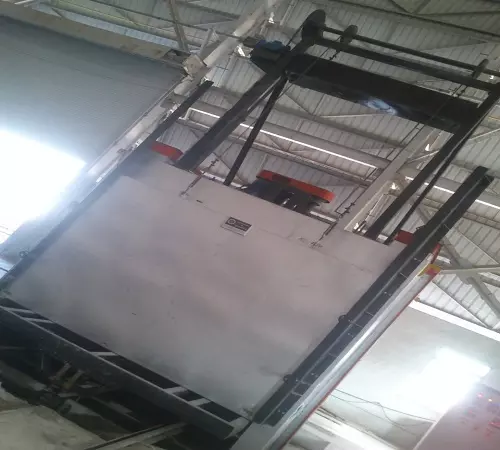
Industrial Applications of Heating Ovens
An Electric Oven in industrial use is very different from household appliances. These ovens handle large loads and operate at controlled temperatures for specific processes such as:
- Drying
- Curing
- Ageing
- Annealing
- Heat treatment
Industries that use these ovens include:
- Foundry cast houses
- Heavy engineering
- Automobile manufacturing
- Rail wagon production
- Electrical machines manufacturing
- Metal processing industries
The ovens operate within a temperature range of 500°C to 4500°C depending on the application and model.
Types of Industrial Ovens Offered by JrFurnace
JrFurnace manufactures three primary oven types to meet varied production requirements.
Bogie Hearth Ovens
Bogie hearth ovens are designed for heavy loads. Materials are placed on a movable bogie platform that enters the oven chamber. Industries use EOT cranes or mechanical devices to load materials.
Key features:
- Single or double door options
- Electro-mechanically operated bogie
- Suitable for heavy components
- Ideal for drying and curing large assemblies
Fixed Hearth Ovens
Fixed hearth ovens have a stationary base. Operators use charging machines or air casters to place materials inside.
Benefits include:
- Strong structural design
- Stable heating environment
- Suitable for medium to heavy components
- Efficient thermal retention
Continuous Ovens
Continuous ovens support high-volume production. These ovens always feature double doors—one for charging and one for discharging.
They are available in:
- Conveyorised type (electro-mechanically operated)
- Trolley type (electro-mechanical or hydraulic pusher system)
In continuous ovens, material enters from the front and exits from the rear after completing the required retention time.
Heating System and Temperature Control
An industrial Electric Oven uses advanced resistive heating systems. Heating elements can be:
- Cartridge type
- Tubular type
These elements are installed along the side walls, back walls, or roof of the oven. Engineers divide heating elements into multiple zones based on oven size.
Control Philosophy
JrFurnace uses:
- Programmable PID controllers
- Thyristor or contactor-based relay logic
- Master-slave control systems
This setup ensures close temperature uniformity and energy-efficient performance.
“Consistent temperature control ensures better product quality and reduced rejection rates.”
Fuel-Fired Oven Option
In addition to electric models, fuel-fired ovens use high-efficiency burners supported by complete combustion systems and safety arrangements. These systems provide reliable heating for specific industrial processes.
Insulation and Construction
Proper insulation reduces energy loss and improves safety.
Insulation Materials
- Mineral wool
- Ceramic fiber blankets
These materials are packed between double-wall panels on:
- Side walls
- Roof
- Doors
- Hearth
This design minimizes external skin temperature and ensures operator safety.
Inner Wall Construction
The inner chamber may use:
- Mild Steel
- Stainless Steel
The choice depends on service temperature requirements.
Air Circulation and Heat Uniformity
Uniform heating improves product quality. JrFurnace installs:
- Suitable baffles
- Recirculation fans
- VFD-driven motors
VFD control allows soft starting and better airflow management. These features improve convection heat transfer and maintain temperature uniformity within ±5°C. For aerospace applications, uniformity can reach ±2–3°C.
Technical Specifications Overview
| Feature | Specification |
| Maximum Temperature | 300°C |
| Ageing Temperature | 200°C |
| Annealing Temperature | 400°C |
| Temperature Uniformity | ±5°C |
| Aerospace Uniformity | ±2–3°C |
| Control System | Programmable PID |
| Construction Type | Double Bogie Hearth |
Ageing and Annealing Applications
The Electric Oven system plays a key role in:
- Ageing of AAAC conductors
- Annealing of aluminium alloy wires
- Heat treatment of drums and loaded components
The double bogie hearth construction supports heavy drum loading while maintaining consistent heating.
Why Industries Choose JrFurnace
Industries prefer JrFurnace for several reasons:
- Strong engineering design
- Reliable heating systems
- Precise temperature control
- Energy-efficient insulation
- Long service life
- Custom-built industrial solutions
Proper thermal management directly impacts production quality and operational efficiency.
Frequently Asked Questions
What makes an Electric Oven suitable for industrial use?
Industrial models provide controlled heating, multi-zone temperature management, heavy-load handling, and strong insulation. These features ensure consistent performance in demanding environments.
How does temperature uniformity affect product quality?
Uniform heating prevents uneven curing or annealing. It reduces defects and ensures consistent metallurgical properties.
What is the advantage of a continuous oven?
Continuous ovens support high production rates by allowing one-end charging and opposite-end discharging without stopping the heating cycle.
Can the oven handle aerospace applications?
Yes. With advanced PID control and optimized airflow systems, the oven achieves uniformity within ±2–3°C for aerospace requirements.