
Drying Oven
Are you looking for a reliable heating solution that improves production speed while maintaining consistent quality?
A well-designed Drying Oven plays a vital role in modern industries where accurate temperature control and uniform heat distribution matter the most. From small workshops to large production plants, industries depend on efficient drying systems to ensure quality output and smooth operations.
At JrFurnace, we design industrial systems that support multiple heating processes while maintaining durability, safety, and cost efficiency. Let’s explore how this equipment improves performance across industries and why it remains a critical part of industrial production.
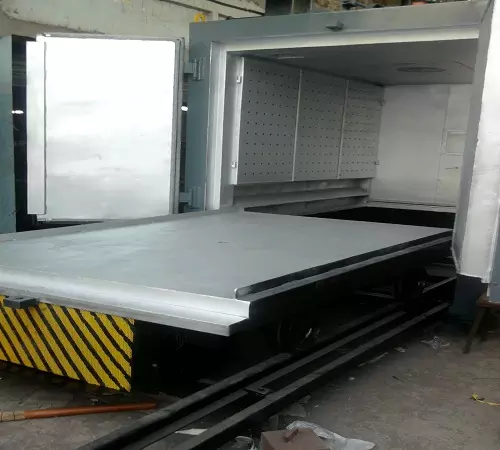
Understanding the Purpose of a Drying Oven
Industries rely on controlled heating processes for various applications. A Drying Oven provides a stable temperature range between 50°C to 300°C/400°C, making it suitable for both light-duty and heavy-duty heating requirements.
This equipment supports:
- Drying
- Annealing
- Polyimide baking
- Die-bond curing
- Sterilize processes
- And other heating applications
Drying ovens are used in industries related to electronics, semiconductor, polyurethane, polymer, rubber and pharmaceutical etc.
The system ensures uniform heat flow so that materials receive consistent treatment without damage or uneven results.
Advanced Construction for Long-Term Performance
A strong build quality ensures durability and safety. JrFurnace designs every Drying Oven with carefully selected materials that prevent heat loss and increase efficiency.
Key Construction Features
- Triple walled protection
- Outer wall coated with Mild Steel Sheet Powder
- Inner chamber constructed of high grade stainless steel material
- Stainless steel tray
- High Grade Mineral Wool insulation
- Heavy Duty Gasket Fitted At Door
- Door fitted with handle and heavy duty hinges
- Integrated With Air Circulation Fan
- Heating effects from bottom and sides
- Air Ventilator at top of oven
- Fitted with wheel for easy movement
“Strong insulation and proper air circulation directly improve heating accuracy and energy efficiency.”
The high-grade mineral wool insulation reduces heat loss, helping industries save energy and maintain consistent internal temperatures.
Temperature Control and Uniform Heating
One of the most important aspects of a Drying Oven is its temperature accuracy. JrFurnace systems maintain steady heat levels, which are essential for processes like:
- Polyimide baking
- Die-bond curing
- Annealing
- Sterilize operations
Integrated air circulation fans distribute heat evenly inside the chamber. Heating elements placed at the bottom and sides ensure balanced temperature distribution. This prevents overheating in one section and underheating in another.
Customization Options for Unique Industrial Needs
Every industry operates differently. Some require larger chambers, while others need digital automation. JrFurnace offers customized solutions at economical pricing.
Custom Features Available
- Customized chamber size
- PLC based HMI controller
- Color touch screen interface
- Data storage capability
- Easy data transfer through pen drive
With PLC-based controls, operators can monitor temperature levels, store heating data, and maintain process consistency.
Technical Overview Table
| Feature | Specification |
| Temperature Range | 50°C to 300°C / 400°C |
| Chamber Material | High-grade Stainless Steel |
| Insulation | Mineral Wool |
| Heating Placement | Bottom and Side |
| Air Circulation | Integrated Fan |
| Door Safety | Heavy Duty Gasket & Hinges |
| Mobility | Wheel Fitted |
This structured design ensures efficient performance across various industrial processes.
Applications Across Industries
Drying ovens are used in industries related to electronics, semiconductor, polyurethane, polymer, rubber and pharmaceutical etc.
Let’s understand how different sectors benefit:
Electronics & Semiconductor
- Component drying
- Die-bond curing
- Moisture removal
Pharmaceutical Industry
- Sterilize processes
- Controlled drying of samples
Polymer & Rubber Industry
- Annealing
- Product finishing
Polyurethane & Coating Industry
- Polyimide baking
- Surface curing
The consistent heat flow improves product stability and enhances final output quality.
Why Industries Choose JrFurnace
Choosing the right heating equipment directly impacts productivity. JrFurnace focuses on delivering:
- Reliable temperature stability
- Strong structural durability
- Energy efficiency
- Easy maintenance
- Cost-effective solutions
The combination of stainless steel interiors and triple wall protection ensures both safety and performance.
Maintenance and Operational Ease
A Drying Oven must be easy to operate and maintain. The air ventilator system prevents pressure buildup. The heavy-duty gasket reduces heat leakage. Wheels allow smooth movement across the workspace.
Regular cleaning of trays and periodic inspection of insulation maintain long-term efficiency.
Benefits of Using a Drying Oven
Improved Productivity
Consistent heating speeds up industrial processes.
Energy Efficiency
High-grade mineral wool insulation minimizes heat loss.
Process Accuracy
Precise temperature control reduces product rejection.
Long Service Life
Strong stainless steel construction ensures durability.
Versatile Applications
Supports drying, annealing, Polyimide baking, die-bond curing, sterilize, and other heating applications.
Frequently Asked Questions (FAQ)
What temperature range does a Drying Oven support?
It typically operates between 50°C and 300°C/400°C, depending on the model.
Can the chamber size be customized?
Yes, JrFurnace offers customized chamber sizes based on industrial requirements.
Which industries commonly use this equipment?
Drying ovens are used in industries related to electronics, semiconductor, polyurethane, polymer, rubber and pharmaceutical etc.
Is automation available?
Yes, PLC based HMI controllers with color touch screens are available for process control and data storage.
Does it ensure uniform heating?
Yes, integrated air circulation fans and side-bottom heating provide even temperature distribution.