
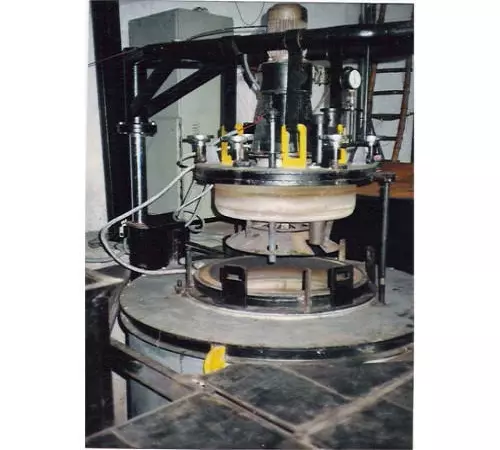
If you look at how heat treatment has evolved over the last few years, one thing stands out clearly—more industries are shifting toward nitriding furnaces. This is not just a trend driven by marketing or new technology hype. It comes from real production needs.
In real production, manufacturers are under constant pressure to improve component life, reduce rejection rates, and maintain dimensional accuracy. Traditional processes like carburizing and quenching still have their place, but they come with limitations. That’s where advanced nitriding furnaces are gaining attention.
From what I’ve seen on the shop floor, once a plant switches to nitriding for the right application, they rarely go back.

What Is Driving the Demand for Advanced Nitriding Furnaces?
The demand for advanced nitriding furnaces is rising because industries now expect more from their components. It’s not enough for a part to be hard. It must also resist wear, maintain shape, and perform consistently over long cycles.
What actually happens is this. As machines run faster and loads increase, even a small surface failure can lead to breakdowns. This pushes manufacturers to look for heat treatment processes that offer better surface integrity without affecting the core material.
Nitriding fits perfectly into that requirement.
How Nitriding Furnaces Improve Surface Performance
A nitriding furnace works by introducing nitrogen into the surface layer of steel components at relatively low temperatures. This creates a hard, wear-resistant layer without the need for quenching.
In real production, this changes a lot of things. Since the process runs at lower temperatures compared to carburizing, the base material doesn’t undergo major structural changes. That means you get surface hardness without compromising the core strength.
One common issue I’ve seen with traditional heat treatment is distortion after quenching. Parts come out of the furnace and need additional machining to correct dimensional changes. With nitriding, this problem is significantly reduced.
That alone saves both time and cost.
Why Low Distortion Matters More Than Ever
If you talk to any plant operator handling precision components, they will tell you the same thing—distortion is expensive. It doesn’t just affect quality; it slows down the entire production line.
Advanced nitriding furnaces operate in the range of about 480°C to 580°C. Because of this lower temperature, thermal stress remains minimal. What actually happens is the material retains its original shape much better.
In industries like automotive or aerospace, where tolerances are tight, this becomes a major advantage. Components such as gears, shafts, and dies maintain their dimensions, reducing the need for post-processing.
The Shift Toward Controlled Atmosphere Processing
Another reason behind the rising demand for nitriding furnaces is the level of control they offer. Modern systems allow precise management of gas flow, temperature, and process timing.
In real production, consistency is everything. You don’t just need one good batch—you need the same result every time.
Advanced nitriding furnaces use controlled atmospheres, typically involving ammonia or nitrogen-based gases. These systems regulate nitrogen diffusion into the material surface very accurately. This leads to consistent case depth and hardness across all components in a batch.
From experience, once a process becomes predictable, production planning becomes easier. That’s a big reason why more manufacturers are investing in these systems.
Growing Demand Across Industries
The demand for nitriding furnaces is not limited to one sector. It’s spreading across multiple industries, each with its own requirements.
In automotive manufacturing, components like crankshafts, camshafts, and gears need high wear resistance. Nitriding provides that without affecting dimensional stability.
In tooling and die manufacturing, surface hardness directly impacts tool life. A properly nitrided die lasts longer and performs better under repeated stress.
Even in general engineering, where cost efficiency matters, nitriding helps reduce maintenance and replacement cycles.
What I’ve noticed is that industries are no longer experimenting with nitriding. They are standardizing it.
Energy Efficiency and Cleaner Operation
Energy consumption has become a serious concern in manufacturing. Traditional heat treatment processes often involve high temperatures and additional quenching steps, which increase energy use.
Advanced nitriding furnaces operate at lower temperatures and eliminate the need for oil quenching. This reduces both energy consumption and environmental impact.
In real production, this also improves working conditions. There’s less smoke, fewer emissions, and a cleaner setup overall. For many plants, this is not just about cost—it’s about compliance and sustainability.
Automation and Process Reliability
Modern nitriding furnaces are no longer manual systems. They come with automated controls, programmable cycles, and monitoring systems.
What actually happens is the operator sets the process parameters, and the system takes care of the rest. Temperature, gas flow, and cycle timing are controlled automatically.
This reduces human error and improves repeatability. In my experience, automation becomes especially valuable when running multiple batches or handling critical components.
Reliable processes lead to fewer surprises, and that’s something every production team appreciates.
Why Advanced Nitriding Furnaces Are a Long-Term Investment
Many manufacturers hesitate before upgrading their heat treatment systems. The initial cost always comes into question. But when you look at the long-term benefits, the picture changes.
Advanced nitriding furnaces reduce rejection rates, minimize rework, and improve component life. Over time, these factors contribute to overall cost savings.
From what I’ve seen, companies that invest in the right furnace technology tend to recover their investment through improved efficiency and reduced downtime.
The Role of Experience in Furnace Selection
Choosing the right nitriding furnace is not just about specifications. It depends on the type of components, production volume, and required surface properties.
At JR Furnace, the focus remains on understanding real production needs rather than just offering standard solutions. Practical experience plays a key role in designing systems that perform consistently in industrial environments.
A well-designed furnace should not only meet process requirements but also integrate smoothly into the existing production setup.