

Bell Furnace
We are Bell Furnace Manufacturers in India. Traditionally for many decades and even today, international bell furnace manufacturers deploy continuous purging of cracked ammonia, throughout the annealing cycle, to avoid decarburisation. This being an expensive process, involving not only consumable costs like ammonia, cracker catalysts etc, but also this involves a good amount of instrumentation associated with the system including expensive maintenance.
Read More
Bell Furnaces
Have you ever wondered how manufacturers achieve consistent strength, shine, and structure in steel coils and wires?
In modern industries, precision heat treatment decides product quality. Many production lines depend on advanced furnace systems to maintain uniform temperature and controlled atmosphere. Among them, Bell Furnaces stand out for their efficiency, simplicity, and dependable performance.
Industries use these furnaces for black annealing, bright annealing, spherodized annealing, and other heat treatment processes up to 1100°C. From steel coils to non-ferrous strips and wire coils, this system delivers consistent results across applications.
Understanding the Working Structure
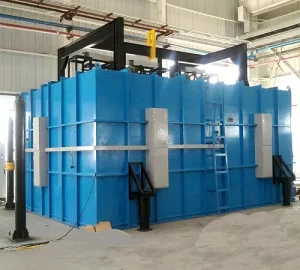
A bell furnace usually comes in rectangular or cylindrical shapes. Manufacturers design them as gas-fired or electrically heated units. The system allows either single-stack or multi-stack arrangements depending on production needs.
Unlike conveyor systems such as those explained in the Continuous mesh belt conveyor working principle, a bell furnace operates in a stationary batch mode. Instead of moving materials continuously, operators load coils onto a base and lower the furnace body over them.
Key Components
- Annealing base assembly
- Inner protective cover
- Heating bell
- Radial circulation fans
- Atmosphere control system
- Overhead crane for loading
The crane places coils correctly onto the base. Operators tilt them into position to ensure proper spacing and airflow.
How the Heating Cycle Works
Atmosphere Control
During the annealing cycle, the system continuously purges ammonia or protective gas. This process prevents decarburization and surface damage. The inner cover maintains a controlled atmosphere while heating and cooling occur.
“Controlled atmosphere ensures bright surface finish and structural integrity.”
Convection and Heat Transfer
Forced circulation plays a major role in temperature uniformity. Radial fans circulate the atmosphere effectively up to 950°C. Heat moves upward along the sides and flows downward through the center, ensuring even heating.
Cooling Stage
Once heating finishes, operators lift the furnace body while the inner cover continues protecting the material. Cooling then happens safely without oxidation.
Applications in Industrial Processing
Bell systems support a wide range of industrial heat treatments.
Primary Applications
- Annealing of steel strips
- Annealing of steel wires
- Normalizing steel castings
- Decarburising of stamps
- Bright annealing of cold-rolled coils
- Heat treatment of hot-rolled plates
These processes improve ductility, refine grain structure, and enhance mechanical properties.
Comparison with Other Heat Treatment Systems
Many industries also explore solutions offered by Mesh Belt Furnace manufacturers in India and other continuous furnace systems. While mesh belt furnace heat treatment supports high-volume continuous processing, bell systems focus on batch precision and flexibility.
Table: Bell System vs Mesh Belt System
| Feature | Bell System | Mesh Belt System |
| Operation Type | Batch | Continuous |
| Temperature Control | Excellent uniformity | Uniform but conveyor-based |
| Maintenance | Low | Moderate |
| Flexibility | High for coil sizes | Ideal for small components |
| Atmosphere Control | Highly controlled | Controlled but moving load |
Both systems serve different industrial needs. Industries often consult leading Heat treatment furnace manufacturers in India to select the best solution for their production goals.
Why Industries Prefer Bell Systems
1. Excellent Temperature Uniformity
The forced atmosphere circulation ensures consistent heat distribution across the entire load.
2. Multiple Base Operation
Operators can use multiple bases. While one load undergoes heating, another cools or gets prepared. This setup improves productivity.
3. Positive Seal Design
The design ensures a strong seal between furnace and base. Without doors or moving mechanisms, heat loss remains minimal.
4. Low Maintenance
Since the system has no complex door or car mechanisms, maintenance requirements stay low.
5. Flexible Lifting Options
Manufacturers provide different bell lifting systems depending on plant layout and customer needs.
Technical Specifications Overview
Standard Operating Parameters
| Parameter | Typical Range |
| Maximum Temperature | Up to 1100°C |
| Heating Type | Gas or Electric |
| Atmosphere | Ammonia / Protective Gas |
| Cooling Method | Controlled under cover |
| Load Type | Coils, strips, wires |
Structural Design Features
- Rectangular or cylindrical construction
- Heavy-duty base assembly
- Inner protective cover
- Radial fan-assisted circulation
- Crane-based loading system
Role in Bright Annealing
Bright annealing requires oxygen-free conditions. The protective atmosphere inside the furnace prevents oxidation and scale formation. As a result, cold-rolled steel strips maintain surface shine and smoothness.
Manufacturers choose this system especially for:
- Automotive steel components
- Electrical steel strips
- Wire manufacturing plants
Consistency in heating directly affects final mechanical strength.
Productivity Advantage
A major strength of this system lies in its operational flexibility. Plants often install two or more bases. While one load processes, workers prepare the next batch. This approach reduces downtime and increases throughput.
Unlike continuous conveyor systems explained in the Continuous mesh belt conveyor working principle, this batch setup suits large coils and heavy materials.
Why Choose JRFURNACE
JRFURNACE delivers rectangular designs known for durability and stable performance. The engineering team tests each system thoroughly before dispatch.
Customers benefit from:
- Reliable operation
- Easy servicing
- Optimal energy use
- Long service life
The company focuses on practical engineering rather than complex mechanisms. Each installation reflects strong design knowledge and industry experience.
Maintenance and Safety
Operators appreciate the low maintenance structure. Without doors or sliding parts, the system reduces mechanical wear.
Safety advantages include:
- Stable base sealing
- Controlled gas circulation
- Reliable lifting mechanisms
- Minimal exposure during cooling
Routine inspections ensure smooth operation for years.
Frequently Asked Questions
Q1: What materials can Bell Furnaces process?
They process steel coils, strips, wires, non-ferrous strips, and castings.
Q2: What is the maximum operating temperature?
Most systems operate up to 1100°C depending on design.
Q3: How does it prevent decarburization?
Continuous purging of ammonia or protective gas prevents surface carbon loss.
Q4: Is it better than mesh belt furnace heat treatment?
It depends on application. Batch processing suits large coils, while mesh systems support continuous small parts production.
Q5: Are these systems energy efficient?
Yes, the sealed base and controlled atmosphere improve heat efficiency.