
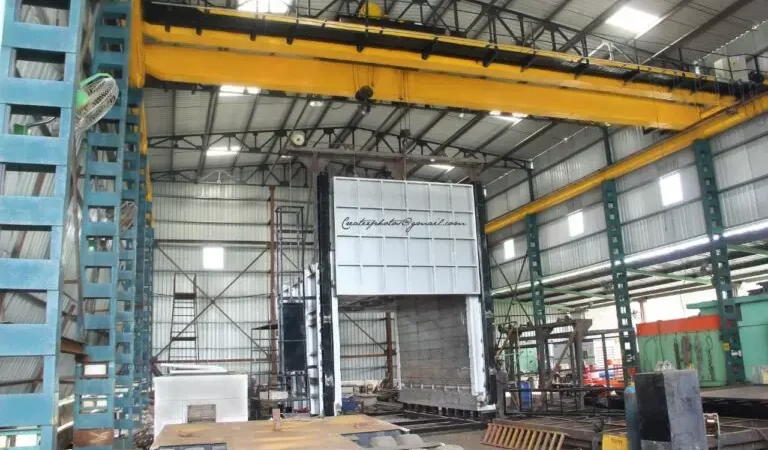
In real production, I’ve seen high-value components fail not because of poor raw material, but because the furnace engineering behind the process was not right. Temperature variations, uneven airflow, or poor insulation can quietly affect metallurgical properties. The parts may look fine when they leave the furnace, but problems show up later during machining, assembly, or field use.
That’s why furnace engineering is critical for industrial success. It directly affects product quality, operating cost, production speed, safety, and long-term reliability. Whether you run a heat treatment line, forging shop, or aerospace component facility, the furnace design determines how consistent your results will be.
Let’s break this down from a practical engineering perspective.
What Does Furnace Engineering Actually Mean in Industry?
Furnace engineering is not just about heating metal. It involves designing a system that controls:
- Temperature uniformity
- Airflow and heat circulation
- Insulation and heat losses
- Load handling and fixture design
- Heating rate and cooling control
- Atmosphere control
- Energy efficiency
- Safety systems
One common issue I’ve seen is when buyers focus only on maximum temperature. But what actually matters is how evenly the furnace maintains that temperature across the entire load. A furnace showing 900°C on the controller does not guarantee every component inside is at 900°C.
That gap is where furnace engineering becomes critical.
Product Quality Depends on Furnace Engineering
In heat treatment processes, even a small temperature variation can change material properties. Hardness, grain structure, ductility, and stress levels all depend on precise heating and soaking.
In real production:
- Parts near the door often heat slower
- Components in the center may overheat
- Heavy loads block airflow
- Thin parts heat faster than thick ones
If furnace engineering does not account for these factors, the result is inconsistent metallurgy.
Proper furnace engineering ensures:
- Uniform heat distribution
- Controlled ramp rates
- Stable soaking temperature
- Repeatable cycles
This consistency is essential in industries like automotive, aerospace, and heavy engineering where reliability matters.
Furnace Engineering Reduces Scrap and Rework
One common issue I’ve seen in poorly engineered furnaces is unpredictable hardness results. Operators end up reprocessing batches, adjusting cycles, or rejecting components.
This leads to:
- Material waste
- Extra energy consumption
- Production delays
- Higher operating cost
When furnace engineering is done correctly, heating cycles become stable and repeatable. Operators don’t need to constantly adjust parameters. Production becomes predictable.
This directly improves industrial success because:
- Scrap rate drops
- Rework reduces
- Quality complaints decrease
- Customer confidence improves
Energy Efficiency Comes from Proper Furnace Design
Industrial furnaces consume significant energy. Poor insulation, heat leakage, and inefficient airflow increase operating cost.
What actually happens is heat escapes through:
- Door gaps
- Thin insulation
- Poor refractory selection
- Unoptimized chamber size
- Excess exhaust lossesF
Good furnace engineering addresses these problems by:
- Using high-efficiency insulation
- Designing proper sealing systems
- Optimizing chamber volume
- Controlling airflow direction
- Reducing heat loss zones
In real installations, improved furnace engineering can reduce fuel or power consumption noticeably over time. This makes a big difference in long-term operating cost.
Production Throughput Improves with Engineered Furnaces
Many plants struggle with bottlenecks in heat treatment. The machining line runs fast, but furnace cycles slow everything down.
This usually happens because:
- Heating rate is slow
- Load size is not optimized
- Cooling time is long
- Furnace recovery time is high
Proper furnace engineering improves:
- Heating efficiency
- Load handling design
- Air circulation speed
- Temperature recovery time
The result is faster batch turnaround and better productivity.
Industrial success depends heavily on throughput. Even small cycle time improvements can significantly increase output.
Furnace Engineering Improves Process Reliability
In real production environments, stability matters more than peak performance. A furnace that performs consistently every day is more valuable than one that performs well occasionally.
Poor engineering leads to:
- Temperature overshoot
- Controller instability
- Uneven heating zones
- Component distortion
- Frequent breakdowns
Proper engineering ensures:
- Stable temperature control
- Balanced heating zones
- Reliable sensors placement
- Uniform airflow patterns
This reliability reduces unexpected downtime and keeps production running smoothly.
Safety Is a Major Reason Furnace Engineering Matters
Industrial furnaces operate at high temperatures and sometimes use combustible gases. Without proper engineering, safety risks increase.
These risks include:
- Overheating
- Gas accumulation
- Explosion hazards
- Structural failure
- Electrical overload
Good furnace engineering integrates:
- Temperature limit controls
- Emergency shutdown systems
- Proper ventilation
- Flame monitoring (for gas systems)
- Load safety design
This protects both operators and equipment.
Application-Specific Furnace Engineering Is Critical
Different industries require different furnace characteristics. A standard design may not work for all applications.
For example:
- Aluminum ageing requires uniform low temperature
- Steel heat treatment needs controlled ramp rates
- Forgings require heavy load handling
- Powder metallurgy needs atmosphere control
- Aerospace parts need precise uniformity
One common mistake is using a generic furnace for specialized processes. This leads to inconsistent results.
Application-specific furnace engineering ensures:
- Correct heating method
- Proper load configuration
- Accurate temperature uniformity
- Suitable insulation selection
This improves both performance and product quality.
Long-Term Maintenance Depends on Engineering
In real plants, maintenance issues often trace back to design problems. Poor furnace engineering can cause:
- Refractory damage
- Heater failures
- Fan imbalance
- Door misalignment
- Sensor drift
When engineering is done correctly:
- Components last longer
- Maintenance becomes predictable
- Spare consumption reduces
- Downtime decreases
This directly improves operational efficiency.
Why Industrial Buyers Should Care About Furnace Engineering
From an industrial buyer’s perspective, furnace engineering affects:
- Product quality
- Production speed
- Operating cost
- Energy consumption
- Equipment life
- Safety
- Reliability
These factors determine long-term success.
At JR Furnace, we often see customers upgrading not because their old furnace stopped working, but because inconsistent results started affecting production. Once proper furnace engineering is implemented, the entire process stabilizes.
The Real Impact of Furnace Engineering in Industry
To summarize from practical experience, furnace engineering determines:
- Whether hardness results remain consistent
- Whether parts distort during heat treatment
- Whether batches require rework
- Whether energy bills increase
- Whether production slows down
- Whether maintenance becomes frequent
In short, furnace engineering is not just a design aspect. It is a production foundation.
When done correctly, it improves:
- Quality
- Efficiency
- Reliability
- Profitability
That’s why furnace engineering is critical for industrial succes