

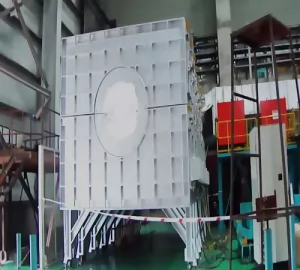
Post Weld Heat Treatment Furnace
We are Post Weld Heat Treatment Furnace Manufacturers in India. Our firm specializes in providing a quality of post Weld Heat Treatment Furnace Post Weld Heat Treatment Services ( PWHT) is one of heat treatments done after welding/machining to improve the Chemical mechanical properties of weldment / machined surfaces. However, in steel fabrication, most common procedure used is Stress Relieving.
Read MorePost Weld Heat Treatment Furnace Manufacturers in India.
Welding joins metal parts with intense heat, but have you ever wondered what happens inside the metal after the arc stops? Many industries depend on strong welds, yet hidden stresses and trapped hydrogen can weaken the joint over time. This is where the Post Weld Heat Treatment Furnace plays a vital role.
A welded structure may look solid from the outside, but internally it carries residual stresses, hardness variations, and hydrogen diffusion. Without proper heat treatment, these hidden issues can cause cracking, distortion, and corrosion. Using a controlled heating process helps restore strength and reliability.
What Is a Post Weld Heat Treatment Furnace?
A Post Weld Heat Treatment Furnace is a specialized heating system used after welding to improve the mechanical and chemical properties of metal components. It applies controlled heating and cooling cycles to reduce internal stress and remove harmful hydrogen.
Industries such as oil and gas, power plants, heavy fabrication, and pressure vessel manufacturing widely use this furnace to maintain safety and performance standards.
Post Weld Heat Treatment is commonly carried out in:
Both furnace types provide uniform temperature control and consistent heating, which are critical for effective results.
Why Post Weld Heat Treatment Is Necessary
After welding, metal undergoes rapid heating and cooling. This process creates:
- Hydrogen induced cracking
- Residual stresses
- Reduced corrosion resistance
- Dimensional instability
- Increased brittleness
A Post Weld Heat Treatment Furnace solves these problems by applying precise heat cycles.
“Proper heat treatment after welding is not an option in critical applications; it is a requirement for safety and durability.”
Key Benefits of Post Weld Heat Treatment
1. Hydrogen Removal
Hydrogen induced cracking is common during welding. High hydrogen levels diffuse into the weld area and heat-affected zone. If not removed, it can cause delayed cracking.
In this process:
- Heating begins immediately after welding.
- The component remains at elevated temperature for several hours.
- Temperature depends on material type and thickness.
This controlled heating helps in effective hydrogen removal and prevents long-term failure.
2. Reduction of Residual Stresses
Welding introduces enormous internal stresses due to uneven heating and cooling. These stresses may lead to:
- Stress corrosion cracking
- Warping
- Premature failure
A Post Weld Heat Treatment Furnace gradually heats and cools the component, reducing residual stresses and restoring balance in the material structure.
3. Improved Corrosion Resistance
Residual stress and microstructural imbalance make metal more vulnerable to corrosion. Post weld heat treatment enhances corrosion resistance by stabilizing the microstructure and relieving stress concentration zones.
This improvement is essential in industries where components operate in harsh environments.
4. Dimensional Stability
Heavy welded structures often experience distortion. Controlled heating inside the furnace improves dimensional stability by equalizing thermal expansion and contraction across the component.
This ensures better alignment, especially in pressure vessels and heavy fabricated assemblies.
5. Tempering Effect
Tempering reduces hardness and improves toughness. After welding, certain alloys may become excessively hard and brittle. The furnace heating cycle softens the structure slightly, improving performance under load.
6. Enhanced Ductile Strength
Post weld heat treatment enhances ductile roughness and flexibility. It allows the material to absorb impact without cracking. This property is crucial for structural and load-bearing applications.
Types of Post Weld Heat Treatment Processes
Post Heating
Post heating starts immediately after welding.
How It Works
- The welded area remains hot for several hours.
- The temperature setting depends on material thickness.
- It reduces hydrogen content.
This step prevents hydrogen induced cracking and ensures long-term weld integrity.
Stress Relieving
Stress relieving is performed after welding completion.
Purpose of Stress Relieving
- Releases internal stress
- Reduces risk of stress corrosion
- Improves overall stability
The furnace temperature adjusts according to material grade and thickness.
Factors to Consider Before Applying PWHT
Before using a Post Weld Heat Treatment Furnace, consider:
- Previous heat treatment history
- Alloy system compatibility
- Material thickness
- Risk of distortion
- Code and industry standards
Although heat treatment may cause minor structural changes, it remains essential for most critical materials.
Comparison of Furnace Types
| Furnace Type | Suitable For | Advantages |
| Bogie Hearth Furnace | Large and heavy components | Uniform heating, easy loading |
| Chamber Furnace | Medium sized components | Precise temperature control |
Both furnace systems provide controlled environments necessary for effective post weld heat treatment.
Process Flow Overview
| Step | Action | Result |
| 1 | Welding completion | Residual stress present |
| 2 | Controlled heating | Hydrogen removal begins |
| 3 | Holding time | Stress reduction |
| 4 | Controlled cooling | Dimensional stability |
Applications of Post Weld Heat Treatment Furnace
Industries that rely on this process include:
- Pressure vessel manufacturing
- Boiler fabrication
- Structural steel plants
- Oil and gas equipment production
- Heavy engineering workshops
In these sectors, weld failure can cause serious damage. Therefore, post weld heat treatment becomes mandatory.
How JrFurnace Supports Reliable Heat Treatment
JrFurnace provides advanced heating systems designed for uniform temperature control and safe operation. Their Post Weld Heat Treatment Furnace solutions ensure consistent heating cycles and improved mechanical properties in welded structures.
Reliable furnace design ensures:
- Accurate temperature monitoring
- Energy efficiency
- Uniform heat distribution
- Safe working environment
Frequently Asked Questions
What temperature is used in post weld heat treatment?
The temperature depends on material grade and thickness. Carbon steel often requires moderate heating, while alloy steels may need higher temperature settings.
How long does hydrogen removal take?
Holding time may vary from a few hours depending on thickness and welding conditions.
Is post weld heat treatment always required?
Not always, but it is mandatory for critical components such as pressure vessels and heavy structural parts.
Can stress relieving damage the material?
If done incorrectly, it may affect properties. However, when controlled properly in a furnace, it improves strength and durability.