
When you work with steel coils every day, you quickly realize that heat treatment is not just a step in the process—it decides the final quality. I’ve seen production lines where everything looked perfect after cold rolling, but the material still failed during forming. The issue usually came down to improper annealing.
That’s where a Bell Annealing Furnace Manufacturer for Steel & Automotive plays a critical role. The right furnace design does not just heat steel; it controls structure, removes stress, and prepares the material for real-world applications like stamping, drawing, and forming.
At JR Furnace, we approach bell annealing with a practical mindset. The focus stays on consistency, energy efficiency, and process control—because in real production, those are the factors that actually matter.
What Is a Bell Annealing Furnace and How It Works in Practice
A bell annealing furnace works on a batch-type system, mainly used for annealing steel coils under a controlled atmosphere. On paper, the concept looks simple. But in real shop-floor conditions, maintaining uniform temperature and atmosphere is where the real challenge lies.
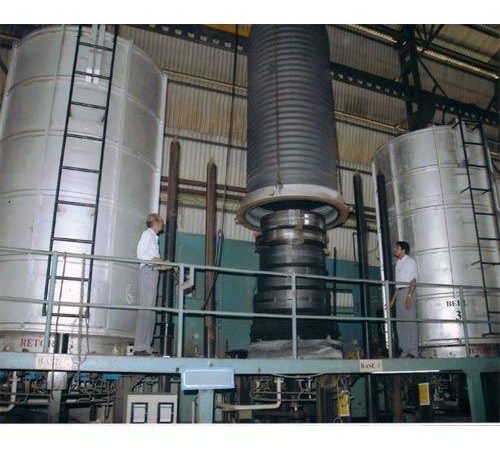
You stack steel coils on a base. Then you place an inner cover over them to create a sealed environment. After that, a heating hood (the “bell”) goes on top. The furnace gradually raises the temperature and holds it for a specific time before controlled cooling begins.
What actually happens during this cycle is more interesting. The heat penetrates from the outside of the coil toward the core. If the heating rate or circulation is not balanced, the outer layers may anneal properly while the inner layers remain stressed. That’s one common issue I’ve seen in poorly designed systems.
A well-built furnace ensures:
- Uniform heat distribution across the entire coil stack
- Controlled atmosphere to prevent oxidation
- Stable cooling to achieve consistent metallurgical properties
Why Bell Annealing Matters in Steel and Automotive Industries
In the steel and automotive sectors, material behavior during forming is everything. If the steel does not have the right ductility, you will see cracks, uneven surfaces, or spring-back issues during stamping.
Bell annealing solves these problems by:
- Relieving internal stresses from cold rolling
- Improving ductility for deep drawing operations
- Refining grain structure for better strength balance
In automotive applications, this becomes even more critical. Components like body panels, brackets, and structural parts demand consistency. Even a small variation in hardness can lead to rejection during pressing.
In real production, I’ve noticed that companies often underestimate annealing quality until defects start showing up downstream. By then, the cost of rejection is already high.
Key Components That Make the Difference
A bell annealing furnace may look like a simple setup, but each component directly affects performance.
Heating Base
This is where everything starts. The base must provide uniform heating from the bottom. Poor base design often creates temperature gradients, especially in larger coil batches.
Inner Cover
The inner cover protects the material from oxidation. It maintains a controlled atmosphere, usually nitrogen or a nitrogen-hydrogen mix. If sealing is not proper, oxidation and discoloration become common issues.
Heating Bell
The heating hood supplies heat through burners or electric elements. In practice, airflow and heat circulation inside the bell are critical. Without proper circulation, hot and cold zones develop.
Cooling System
After heating, controlled cooling defines the final properties. Fast or uneven cooling can distort results. A well-designed cooling hood improves cycle time without compromising quality.
Real Production Challenges and How Good Design Solves Them
In theory, annealing looks straightforward. In actual plant conditions, several problems show up.
One common issue I’ve seen is uneven hardness across coils. This usually happens due to poor heat circulation or incorrect stacking. A properly engineered furnace addresses this with optimized airflow design.
Another issue is oxidation. If the atmosphere is not controlled properly, you end up with scaling or discoloration. This creates extra work in cleaning and sometimes leads to rejection.
Energy consumption is another concern. Many older furnaces waste heat due to poor insulation or inefficient burners. Modern systems focus on minimizing heat loss and improving fuel efficiency.
At JR Furnace, we design systems keeping these real-world problems in mind. The goal is not just to run the furnace, but to run it efficiently over long production cycles.
Process Control and Automation in Modern Furnaces
Today, manual control is not enough for consistent results. Most operations rely on PLC-based systems to manage temperature profiles and cycle timing.
In real production, automation helps in:
- Maintaining repeatable cycles
- Reducing operator dependency
- Tracking process data for quality control
What actually improves performance is not just automation, but how well it integrates with the process. A good system allows operators to adjust parameters based on material type and batch size without overcomplicating the setup.
Energy Efficiency and Cost Impact
Energy cost plays a major role in furnace operation. In many plants, annealing consumes a significant portion of total energy.
From what I’ve observed, improving furnace efficiency can directly reduce operational cost. Better insulation, optimized burner design, and heat recovery systems make a noticeable difference.
For example, reducing heat loss even slightly can save a large amount over continuous cycles. Over time, this impacts both production cost and overall plant efficiency.
Choosing the Right Bell Annealing Furnace Manufacturer for Steel & Automotive
Selecting the right manufacturer is not just about specifications on paper. It comes down to how well the system performs under real operating conditions.
From an engineering perspective, you should look for:
- Proven experience in handling steel coil annealing
- Customization based on batch size and application
- Strong control over temperature uniformity
- Reliable after-installation support
At JR Furnace, we work closely with plant teams to understand actual production challenges before finalizing the design. That approach helps avoid common issues later.
Practical Applications Across Industries
Bell annealing furnaces are widely used across different sectors, but steel and automotive remain the primary users.
In steel plants, they handle cold rolled coils, silicon steel, and alloy grades. In automotive industries, they prepare materials for forming and fabrication.
What matters most is consistency. When the same coil quality repeats batch after batch, downstream operations become smoother and more predictable.
What You Should Expect from a Well-Designed System
A properly designed bell annealing furnace does more than complete a heat cycle. It improves the entire production flow.
You will notice:
- Better forming performance in downstream processes
- Lower rejection rates
- Consistent material properties across batches
- Reduced energy consumption over time
In real production, these improvements are easy to measure. You see fewer defects, smoother operations, and better overall output.